How Are Drones Controlled Remotely? Understanding Radio and Satellite Link Technology
Ever watched a drone zip through the sky and wondered how on earth someone is making it do those incredible flips and turns from hundreds of feet away? You’re not alone. The technology behind remote drone control is genuinely fascinating, and it’s far more sophisticated than most people realize. In this article, I’m going to walk you through exactly how drones communicate with their operators, covering everything from basic radio frequencies to cutting-edge satellite systems.
The Fundamentals of Drone Remote Control
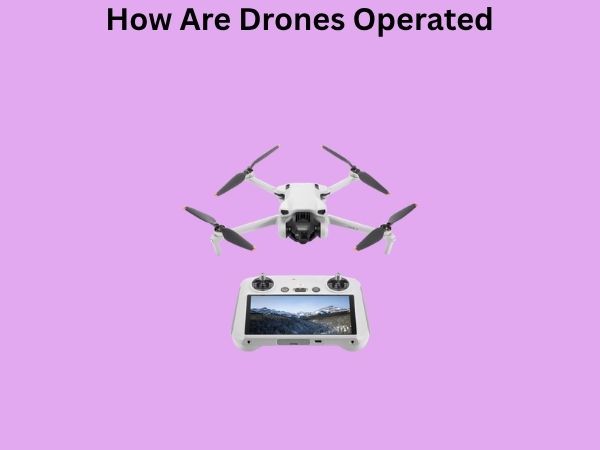
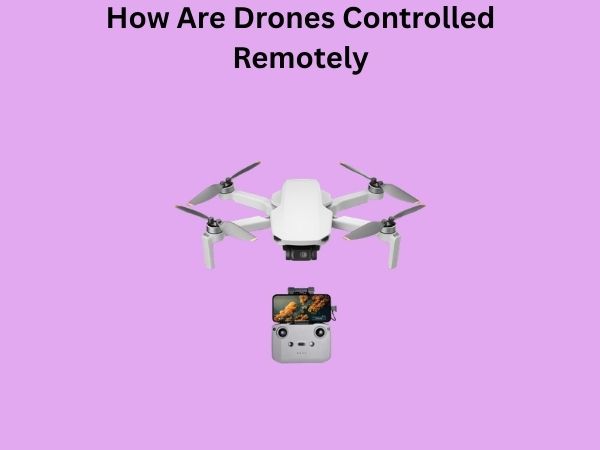
Let me start with the absolute basics. A drone isn’t magical—it’s just a machine that responds to wireless signals sent from a controller held in your hands. Think of it like a radio-controlled car, except this one flies. The fundamental principle is simple: you push buttons or move joysticks on the controller, which sends encoded signals through the air to the drone, and the drone’s onboard receiver interprets those signals and makes adjustments to its motors.
But here’s where it gets interesting. Unlike a simple radio-controlled toy from the 1980s, modern drones are incredibly complex systems that manage stabilization, altitude, speed, rotation, and a dozen other variables simultaneously. The remote control system has to be reliable, fast, and accurate enough to handle all these tasks in real-time.
Radio Frequency Communication: The Backbone of Drone Control
The vast majority of consumer and commercial drones rely on radio frequency communication. This is the wireless technology that’s been used for decades in various applications. Radio waves are electromagnetic waves that travel through the air at the speed of light, and they’re perfect for drone control because they can travel relatively far and penetrate obstacles reasonably well.
How Radio Signals Work for Drone Control
When you operate a drone with a standard remote controller, here’s what’s actually happening behind the scenes. Your controller has a transmitter that converts your inputs—stick movements, button presses, and switch positions—into radio signals. These signals are broadcast at a specific frequency, and the drone’s receiver picks up these signals and decodes them.
The beauty of radio frequency systems is that they’re bidirectional in many modern drones. Not only does your controller send signals to the drone, but the drone also sends signals back to your controller. This return link allows you to see real-time telemetry data like battery percentage, GPS coordinates, altitude, and even live video feed from the drone’s camera.
Transmitter and Receiver Components
Your remote controller contains a transmitter module that acts like a tiny radio station. This module takes the data from your inputs and modulates it onto a radio carrier wave at a specific frequency. The transmitter operates at a certain power level, which determines how far the signal can travel before it becomes too weak to receive.
The drone, meanwhile, has a receiver module that’s tuned to the exact same frequency as your transmitter. This receiver is constantly listening for incoming signals. When it detects a signal from your controller, it decodes the information and sends it to the drone’s flight controller—essentially the drone’s brain—which then executes the commands by adjusting motor speeds.
Modern systems often use diversity receivers, which means the drone has multiple antennas positioned strategically around its body. This technique helps the drone maintain a strong signal connection even when you’re moving around or when the drone’s orientation changes.
Understanding Control Channels and Signal Encoding
When people talk about drone control channels, they’re referring to the different control inputs that need to be transmitted. A basic quadcopter typically needs at least four primary channels: throttle, pitch, roll, and yaw. But modern drones often have many more channels for things like gimbal control, camera zoom, LED mode, and return-to-home activation.
Channel Allocation and Frequency Hopping
Each channel occupies a portion of the radio spectrum. Think of it like different lanes on a highway. Some older systems use fixed frequencies for each channel, while newer systems employ frequency hopping technology. Frequency hopping is brilliant because it makes the signal more resistant to interference and jamming. The transmitter and receiver rapidly switch between different frequencies according to a predetermined pattern, making it nearly impossible for outside interference to consistently block the signal.
This technology was actually invented during World War II and is still incredibly relevant today. It’s the reason your drone doesn’t lose connection just because someone’s WiFi router turned on nearby.
Signal Encoding Methods
The actual encoding of signals varies depending on the drone manufacturer and the control protocol being used. Popular protocols include PWM (Pulse Width Modulation), where the length of a signal pulse represents the value being transmitted. Other systems use more sophisticated digital encoding methods like SBUS or PPM, which pack multiple channel values into a single data stream.
- PWM: Simple but effective; each channel gets its own wire or frequency slot
- PPM: Multiple channels encoded into pulses separated by timing intervals
- SBUS: Serial bus format that sends all channel data in a rapid digital stream
- Proprietary Digital Protocols: Custom encryption and encoding unique to specific manufacturers
Satellite-Based Drone Control Systems
Now, here’s where things get really interesting. While radio frequency systems work great for line-of-sight operations, they have limitations. If your drone goes beyond the horizon or if obstacles block the signal, you lose control. This is where satellite-based control systems come into play.
How Satellite Control Works
Satellite-based drone control is still relatively rare in consumer drones but increasingly common in industrial and military applications. Instead of a direct radio link between your controller and the drone, the signals route through satellites in orbit. Your controller sends a signal up to a satellite, the satellite relays it to the drone, and the return signal follows the reverse path.
The advantage is obvious: you can control your drone from anywhere on Earth, even in remote locations with no cell service or radio infrastructure. The disadvantage is latency. Satellite signals have to travel thousands of miles, which introduces a noticeable delay between your input and the drone’s response.
Latency Challenges with Satellite Control
Latency—the time delay between sending a command and seeing the result—becomes a serious consideration with satellite systems. A geosynchronous satellite is about 22,000 miles up, so the signal has to travel that distance up and back, plus the drone is moving around, so you’re constantly calculating where it actually is versus where you’re controlling it to be. Most satellite drone operations accept latencies of a few seconds, which requires the drone’s autonomous systems to handle a lot of the heavy lifting.
The Crucial Role of GPS in Drone Navigation
Here’s something that surprises a lot of people: GPS isn’t just for knowing where your drone is. It’s integral to how modern drones are controlled. Most drones today have GPS receivers onboard, and they use GPS signals to maintain precise positioning and altitude.
GPS-Assisted Flight Stabilization
When you’re controlling a drone with a standard remote, you’re actually giving it target positions and orientations, not directly commanding motor speeds. The drone’s flight controller uses GPS and onboard sensors like accelerometers and gyroscopes to automatically adjust motor speeds to achieve those targets. This is why drone flight feels so smooth and responsive—the flight controller is doing thousands of calculations per second.
If GPS signals are lost—say, you fly inside a building—the drone relies on its other sensors to maintain position. Many modern drones use visual positioning systems with downward-facing cameras and optical flow sensors to maintain altitude and horizontal positioning even without GPS.
Common Frequencies Used in Drone Operations
Different regions use different frequency bands for drone operations, and this is where regulatory compliance comes in. Let me break down the main frequency bands you’ll encounter.
2.4 GHz Band: The Most Common Choice
The 2.4 GHz band is the international standard for consumer drones. This frequency is used for WiFi, Bluetooth, and countless other devices, which might sound like it would cause interference issues. But modern drones use frequency hopping and spread spectrum technology to coexist peacefully with all these other devices.
The 2.4 GHz band offers several advantages: it’s globally available, antennas are small and efficient at this frequency, and the bandwidth is sufficient for high-quality control signals and video transmission.
5.8 GHz Band for Video Transmission
Many drones use the 2.4 GHz band for control signals and the 5.8 GHz band for video transmission. This separation makes sense because video requires much higher bandwidth than control signals. The 5.8 GHz band offers more available spectrum, allowing for clearer, more stable video transmission.
900 MHz and Lower Frequency Bands
Some industrial drones and long-range systems use frequencies like 900 MHz. These lower frequencies have better range and penetration through obstacles compared to 2.4 GHz and 5.8 GHz. However, they’re typically licensed frequency bands, so you need proper authorization to use them.
- 900 MHz: Extended range, better obstacle penetration, licensed in most countries
- 1.2 GHz: Often used for long-range FPV (First Person View) systems
- 2.4 GHz: Consumer standard, globally available, good all-around performance
- 5.8 GHz: Video transmission, higher bandwidth, shorter range
Latency and Response Time in Drone Control
The time it takes for a command to travel from your controller to the drone and back is critical to how the drone responds. Even a small delay can make the flying experience feel sluggish or unresponsive.
Acceptable Latency Thresholds
For smooth, responsive drone control, latency should ideally be under 100 milliseconds. Most commercial drones achieve this easily with radio frequency systems. At 100 milliseconds, you don’t consciously perceive the delay. Once you get above 200-300 milliseconds, you’ll start to notice the lag, and flying becomes more difficult, especially for precise maneuvers.
Factors Affecting Latency
Several factors contribute to overall latency in drone control systems. The wireless link itself introduces some delay, but so does the processing of signals in both the controller and the drone’s flight controller. Video transmission, if enabled, also adds latency depending on the video compression and transmission method.
Weather conditions and electromagnetic interference can also indirectly affect latency by forcing the system to retransmit lost packets, effectively increasing the response time.
Safety Features and Failsafes in Remote Control Systems
Modern drones don’t just rely on you maintaining a constant signal. They’re designed with multiple layers of safety to handle signal loss gracefully.
Signal Loss Detection and Response
When a drone loses signal from its controller, it detects this situation almost immediately. The drone’s flight controller notices that it’s not receiving updated command packets within the expected time frame. When this happens, the drone typically enters a failsafe mode, which most commonly means returning to home or landing safely.
You can usually configure what happens on signal loss. Options include returning to the GPS coordinates where the drone originally took off, landing in place, or hovering until the signal is restored. This redundancy means that even if your controller’s battery dies or you accidentally leave it behind, your drone won’t just fall out of the sky.
Encryption and Security Protocols
Protecting the drone control link from unauthorized access is increasingly important. Many modern drones use encrypted communication protocols, which means even if someone has compatible hardware and is on the same frequency, they can’t hijack your drone. The encryption prevents man-in-the-middle attacks and ensures that only authorized controllers can command a specific drone.
Obstacles and Interference: Real-World Challenges
In an ideal world, your control signal would travel perfectly from your controller to the drone and back. But the real world is messy. Buildings, terrain, and electromagnetic interference all affect signal quality.
Line-of-Sight Considerations
Radio waves don’t bend around obstacles very well, especially at higher frequencies like 5.8 GHz. This is why most drone regulations require line-of-sight operation—you need to be able to see your drone with your own eyes or through a camera feed. Flying a drone behind a building or over a hill greatly reduces your control range.
However, the 2.4 GHz control signal is more forgiving than the 5.8 GHz video signal. The lower frequency penetrates obstacles better, so you might maintain control even if you lose video feed.
Electromagnetic Interference Sources
In urban environments, you’re surrounded by radio transmitters. Cell towers, WiFi routers, microwave ovens, and industrial equipment all emit electromagnetic radiation. While modern drones handle this remarkably well through frequency hopping and other techniques, it’s still worth being aware of.
High-power transmitters near your flying location can sometimes degrade signal quality. This is why drone pilots sometimes report issues when flying near airports, military bases, or other facilities with powerful radar systems. The sheer power of these transmitters can occasionally overwhelm a drone’s receiver, even with filtering.
Regulatory Requirements and Legal Compliance
Before we go further, I should mention that drone operations are heavily regulated in most countries. The control system you use must comply with local regulations regarding frequency usage, transmitter power, and operational parameters.
FCC Regulations in the United States
In the US, the FCC (Federal Communications Commission) sets the rules. Consumer drones are generally permitted on the 2.4 GHz band under FCC Part 15, which defines low-power consumer devices. These devices must accept interference from other devices and cannot cause interference to licensed services.
If you want to use higher power levels or different frequencies, you need proper licensing. Commercial drone operators and those running long-range operations typically need to acquire proper licenses from the FCC.
International Standards and Variations
Different countries have different rules. The European Union generally allows similar frequency bands to the US but with different power limits. Some countries are more restrictive, while others are more permissive. Always check your local regulations before operating a drone.
Future Technologies in Drone Remote Control
The technology is constantly evolving. Let me share some exciting developments on the horizon.
5G and Beyond
5G network infrastructure is opening up new possibilities for drone control. Instead of needing a direct radio link between your controller and the drone, you could control drones through cellular networks. This would enable remote operation over cellular coverage areas without needing line-of-sight to the drone.
The low latency of 5G networks (potentially under 50 milliseconds) makes this feasible even for precision operations. In the future, you might control a drone on the other side of the world through a 5G connection as easily as you control one in your backyard today.
Mesh Networking
Imagine a swarm of drones where they all communicate with each other and relay control signals. Mesh networking allows signals to