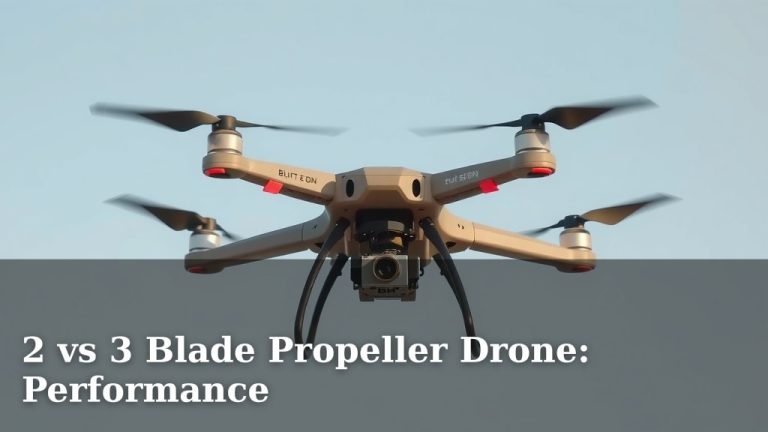
2 Blade vs 3 Blade Drone Propellers: Which Performs Better?
When you’re shopping for drone propellers or thinking about upgrading your current setup, you’ve probably stumbled across this question: should I go with 2 blade or 3 blade propellers? It’s one of those decisions that seems simple on the surface but actually involves quite a bit of technical know-how. I’m here to break it down for you in a way that makes sense, whether you’re a seasoned drone pilot or just getting your feet wet in this exciting hobby.
The truth is, there’s no one-size-fits-all answer. Your choice depends on what you’re trying to achieve with your drone, your flying style, and the specific aircraft you’re operating. Let me walk you through everything you need to know.
Understanding the Basics: What’s the Difference?
Before we dive into the nitty-gritty, let’s establish what we’re actually talking about here. A drone propeller’s blade count refers to how many individual blades are attached to the motor shaft. A 2 blade propeller has two blades, while a 3 blade propeller has three. Seems straightforward, right? But this simple difference creates ripple effects throughout your drone’s performance.
Think of it like comparing a bicycle to a tricycle. Both get you from point A to point B, but they handle differently and suit different riding styles. The same principle applies to drone propellers.
The Mechanics Behind 2 Blade Propellers
How 2 Blade Propellers Work
A 2 blade propeller is the simpler, more traditional design. When the motor spins, these two blades push air downward and generate lift. The rotating mass is concentrated on just two points, which means the weight distribution is different compared to three blade designs.
The 2 blade configuration creates a distinctive flying characteristic. Because there’s more mass concentrated on each blade to maintain balance, individual blades tend to be thicker and sturdier. This affects how the propeller cuts through the air and how much strain it puts on your motor.
Efficiency and Power Consumption
One of the biggest advantages of 2 blade propellers is their efficiency. They require less power to achieve the same thrust compared to their 3 blade counterparts. Imagine trying to push through water with two wide paddles versus three thinner ones—the two paddles might do the job with less effort.
This efficiency translates directly into battery life. When you’re using 2 blade propellers, your motors don’t have to work as hard, which means your drone can stay airborne longer. For long-range flights or extended recording sessions, this is a game-changer.
Speed and Agility
Here’s where things get interesting. Because 2 blade propellers require less power and have lower inertia, they accelerate and decelerate faster. Your drone responds quicker to control inputs, making it feel snappier and more agile in the air.
If you’re into racing drones or freestyle flying where quick directional changes matter, 2 blade propellers are typically your go-to choice. The responsiveness is noticeably sharper.
The Mechanics Behind 3 Blade Propellers
How 3 Blade Propellers Work
Now let’s talk about 3 blade propellers. These designs have three blades instead of two, which distributes the workload differently. The weight is spread across three points rather than two, and each individual blade can be thinner and more flexible.
The additional blade means there are more airfoil surfaces generating lift at any given moment. It’s like having three workers sharing a job instead of two—theoretically, you can get smoother, more continuous output.
Thrust and Lifting Power
This is where 3 blade propellers shine. Because you have an additional blade generating lift, 3 blade propellers typically produce more thrust at the same RPM compared to 2 blade versions. This is particularly valuable if you’re flying a heavier payload or need maximum lifting capacity.
Photographers and videographers who mount cameras or additional equipment on their drones often prefer 3 blade propellers because they can handle the extra weight more comfortably.
Stability and Smoothness
The additional blade in a 3 blade propeller design creates smoother thrust delivery. Because you always have at least one blade cutting through the air, there are fewer “dead zones” in the rotation cycle. This results in more stable, smoother flight characteristics.
If you’re capturing footage for professional work, that smoothness matters. You’ll notice less vibration in your video, and your drone will feel more stable when hovering in place.
Power Consumption and Battery Life Comparison
Let’s get down to the real-world implications for your battery life. 2 blade propellers are more efficient because they accomplish the same lifting job with fewer surfaces cutting through the air. However, the difference isn’t as dramatic as you might think.
In practical terms, you might see a 10-15% improvement in flight time with 2 blade propellers under ideal conditions. That could mean an extra 2-3 minutes of flight time on a typical consumer drone. For some people, that’s meaningful. For others, it’s negligible.
3 blade propellers demand more power from your motor to generate the same amount of thrust, but they also provide that thrust more smoothly, which can actually be more efficient in certain flight scenarios.
Noise Levels: How Do They Compare?
The Sound Factor in Your Flight Experience
Here’s something that doesn’t get discussed enough: noise. Drones are already loud, but propeller choice affects just how much racket your aircraft makes.
2 blade propellers tend to produce a lower frequency noise with occasional thumping sounds. Because the blades are thicker and the power delivery pulsates more distinctly, you get that characteristic whop-whop-whop sound.
3 blade propellers generate a higher frequency, more continuous whine. Many people find this less annoying than the thumping of 2 blade propellers, though it’s definitely a subjective experience.
If you’re flying in noise-sensitive areas or simply want to be a good neighbor, this factor might influence your decision.
Vibration and Motor Stress
Motor longevity is something every drone pilot should consider. Your motors are spinning thousands of times per minute, and the propeller design affects how much stress they endure.
2 blade propellers create more uneven power distribution during rotation. Each blade completes its thrust phase, then there’s a brief moment before the next blade takes over. This pulsating load can create more vibration in your motor and frame.
3 blade propellers distribute the load more evenly throughout the rotation cycle, reducing vibration and stress on motor components. Over the long term, this can extend motor lifespan.
Weight Considerations
The mass of your propellers directly affects how much energy your drone needs to stay airborne. Generally speaking, 2 blade propellers weigh less than 3 blade propellers because you’re physically manufacturing fewer blades.
However, because 2 blade propellers need to handle more stress per blade, they’re typically constructed with thicker, more robust materials. This sometimes means the weight difference isn’t as dramatic as you’d expect.
For lightweight drones and racing applications, those grams can matter. For larger photography drones, it’s usually not a deciding factor.
Durability and Maintenance Needs
Which Propellers Last Longer?
Propeller durability depends on several factors beyond just blade count. Material quality, manufacturing precision, and your flying environment all play roles.
That said, 2 blade propellers generally withstand impact better because each blade is thicker and more rigid. If you’re constantly crashing and breaking propellers, the sturdier construction of 2 blade designs might save you money in the long run.
3 blade propellers, with their thinner blade construction, are more prone to bending or fracturing on hard impacts. However, they’re also less likely to shatter completely, instead bending and being potentially repairable.
Replacement Costs
You’ll want to check pricing for the specific propellers your drone uses. In general, 2 blade propeller sets tend to be slightly less expensive because they require less material to manufacture. But the difference is usually minimal—we’re talking a dollar or two per set.
Don’t let price be your primary decision factor. Getting the right propeller type for your needs is worth paying a few extra dollars.
Flying Conditions and Environment
Wind Resistance
How do these propellers perform in windy conditions? This is where things get interesting.
2 blade propellers, with their larger individual blade area, actually catch wind more effectively. If you’re flying in gusty conditions, you might find 2 blade propellers harder to control because they respond more aggressively to wind gusts.
3 blade propellers, spreading the surface area across three blades, can actually be more stable in windy conditions. The wind affects each smaller blade individually rather than concentrating force on two large surfaces.
Different Environments
Flying indoors presents different challenges than outdoor flight. For indoor use where space is confined and precision matters, many pilots prefer 3 blade propellers for their stability and smooth thrust delivery.
Outdoor flying, especially if you’re chasing distance and flight time, often favors 2 blade propellers for their efficiency.
What About Your Specific Drone Model?
Here’s something crucial that often gets overlooked: your drone might actually be designed specifically for one type of propeller.
Some racing drones are engineered around 2 blade propellers and won’t perform well with 3 blade alternatives. Professional camera drones are often optimized for 3 blade propellers to handle payload weight and vibration concerns.
Before making any changes, check your drone’s specifications and manufacturer recommendations. Using the wrong propeller type can degrade performance or even damage your motor bearings.
Performance Metrics Comparison Table
Let me break down the key differences in a clear format:
- Flight Efficiency: 2 blade propellers win here with 10-15% better battery life
- Thrust Production: 3 blade propellers generate more lift and handle heavier payloads better
- Responsiveness: 2 blade propellers offer quicker acceleration and deceleration
- Stability: 3 blade propellers provide smoother, more consistent flight
- Noise Level: 3 blade propellers produce less annoying sounds to most ears
- Vibration: 3 blade propellers create less stress on motors
- Speed Capability: 2 blade propellers typically achieve higher maximum speeds
- Durability: 2 blade propellers handle crashes better due to thicker construction
Choosing the Right Propeller for Your Needs
For Racing and Freestyle Flying
If you’re into drone racing or freestyle acrobatics, 2 blade propellers are almost certainly your choice. The responsiveness, speed capability, and agility they provide are what you need for quick maneuvers and competitive flying.
For Photography and Videography
Professional drone pilots typically prefer 3 blade propellers. The smooth, stable flight translates to better video quality. The ability to handle heavier camera payloads is another major advantage.
For Casual Recreation and Learning
If you’re flying for fun and learning, either option works fine. However, if you’re in a noise-sensitive environment or want maximum flight time between charges, 2 blade propellers might be better. If you value stability and smooth hovering, go with 3 blade propellers.
For Long-Distance Flights
Planning a long-range flight? The efficiency advantage of 2 blade propellers becomes very valuable when every minute of flight time counts.
Can You Mix Blade Types?
A question I get asked often: can you use 2 blade propellers on some motors and 3 blade on others? The short answer is no, and here’s why.
When you mix different propeller types on the same drone, you create imbalanced thrust output. Your flight controller can compensate somewhat, but you’ll introduce unnecessary vibration and instability. It’s like having different sized tires on a car—technically it might work, but it’s not recommended.
Always use the same propeller configuration on all four motors of a quadcopter.
Future Trends in Propeller Design
The drone industry is constantly evolving. We’re seeing hybrid designs that try to capture the best of both worlds, folding propellers that reduce wind resistance, and advanced materials that improve efficiency.
Manufacturers are increasingly using carbon fiber composites and other advanced materials to create propellers that are both lightweight and durable. Some designs feature variable blade pitch, though these remain niche products for specialized applications.
As battery technology improves and drone applications expand, we might see the emergence of propeller designs that blur the lines between 2 and 3 blade categories.
Conclusion
So which performs better: 2 blade or 3 blade drone propellers? The honest answer is that neither is universally superior. They’re designed for different purposes and excel in different scenarios.
Choose 2 blade propellers if you prioritize efficiency, speed, responsiveness, and durability. They’re ideal for racing, freestyle flying, and maximizing battery life. Choose 3 blade propellers if you need stability, smooth thrust, better payload capacity, and reduced noise levels. They’re perfect for professional photography, videography, and smooth hovering.
The best propeller is the one that matches your drone model, flying style, and specific use case. Don’t overthink it, but do make an informed decision based on what matters most to you. Your drone will perform better and you’ll enjoy flying more when you’ve chosen the right tool for your mission.
Frequently Asked Questions
Can I upgrade my drone’s propellers from 2 blade to 3 blade or vice versa?
Not without significant considerations. Most drones are specifically designed and balanced for their original propeller configuration. Switching blade types can cause vibration, reduce flight time, and potentially damage your motors. Check your manufacturer’s specifications before attempting any propeller changes. Some drones offer compatible options from third-party manufacturers, but it’s risky without expert guidance.
Which propellers are quieter when flying?
Generally speaking, 3 blade propellers produce a higher frequency whine that many people find less annoying than the thumping sound of 2 blade propellers. However, noise perception is subjective. Some people actually prefer the characteristic sound of 2 blade propellers. The best way to determine which sounds better to your ears is to listen to samples online or test both types if possible.
How much longer can I fly with 2 blade propellers?
You can typically expect 10-15% better flight time with 2 blade propellers compared to 3 blade alternatives, assuming the same weight and motor specifications. On a drone with a standard 25-minute flight time, this translates to roughly 2-3 extra