How Are Drones Being Used in Ukraine? The Evolution of Modern Warfare
When you think about modern warfare, what comes to mind? Tanks rolling across fields? Fighter jets screaming through the sky? Well, let me tell you something that might surprise you—some of the most impactful military technology in today’s conflicts doesn’t make a sound. I’m talking about drones. And if you’ve been following the situation in Ukraine, you’ve probably noticed that unmanned aerial vehicles have become absolutely central to how this conflict is unfolding. Let’s dive deep into how drones are reshaping the battlefield and what this means for the future of military operations.
Understanding the Drone Revolution in Modern Conflict
The use of drones in Ukraine represents something genuinely transformative. We’re not talking about small quadcopters used for photography or surveillance anymore. These are sophisticated pieces of military hardware that are fundamentally changing how soldiers fight, strategize, and survive on the battlefield. Think of it like comparing a horse to a car—the basic principle of transportation exists in both, but the efficiency and capability are worlds apart.
What makes the Ukrainian conflict particularly significant is that both sides—Ukrainian forces and Russian forces—have rapidly adapted drone technology in creative ways that military planners probably didn’t anticipate just a few years ago. It’s almost like watching innovation happen in real-time, except the stakes are literally life and death.
The Shift from Traditional to Unmanned Warfare
For decades, military operations relied on boots on the ground and pilots in cockpits. But that’s changing rapidly. Drones offer something previous generations of soldiers never had: the ability to gather intelligence, strike targets, and support operations without immediately risking human lives in certain situations. It’s a fundamental shift in how warfare operates, and Ukraine has become the testing ground for this new reality.
Reconnaissance and Surveillance: The Eyes in the Sky
Let me start with the most obvious use of drones—watching what’s happening on the ground. Reconnaissance drones have become absolutely essential for both Ukrainian and Russian forces. These aren’t weaponized systems necessarily; they’re information-gathering machines, and in warfare, information is everything.
Real-Time Intelligence Gathering
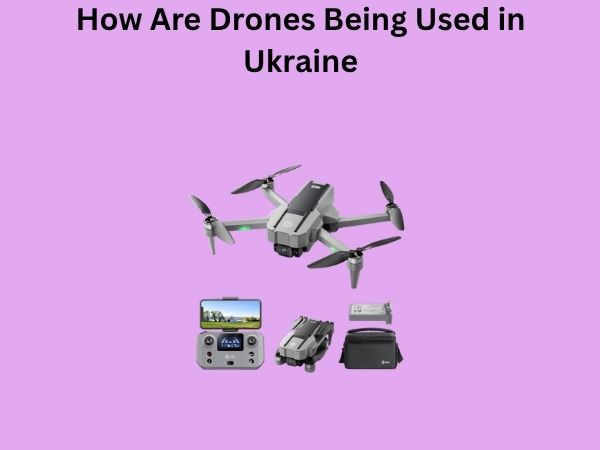
Ukrainian forces have deployed commercial drones—many of them off-the-shelf quadcopters that you could theoretically buy online—to scout Russian positions. Imagine being a commander trying to understand enemy movements without risking your soldiers. That’s what these surveillance drones provide. They fly over territory, capture video footage, and relay real-time information back to troops on the ground.
The beauty of this approach is its accessibility. Ukrainian forces have adapted to using relatively inexpensive drones because, frankly, they work. A commercial drone might cost a few hundred dollars, but the intelligence it provides could be invaluable. That’s a pretty good return on investment when you’re talking about military operations.
Battlefield Mapping and Monitoring
Drones have also revolutionized how commanders understand the physical landscape they’re operating in. Before an assault or defensive maneuver, Ukrainian military personnel use drone footage to map out terrain, identify obstacles, and spot enemy fortifications. This isn’t guesswork anymore—it’s based on actual aerial footage that commanders can study and analyze.
Russian forces have employed similar tactics, using surveillance drones to track Ukrainian troop movements and identify potential targets. It’s created a situation where both sides are essentially staring at each other through electronic eyes, constantly gathering data that informs strategic decisions.
Combat Drones: From Observation to Strike Capability
Now here’s where things get more intense. Beyond surveillance, drones in Ukraine have evolved into actual weapons systems. We’re talking about unmanned aerial vehicles equipped with explosives, capable of striking targets with precision that would have seemed like science fiction just a couple of decades ago.
Modified Commercial Drones as Weapons
One of the most remarkable adaptations has been the modification of commercial drones to carry explosives. Ukrainian forces, in particular, have shown incredible ingenuity in weaponizing consumer-grade drones by attaching grenades, anti-tank mines, or custom-built warheads to them. It’s like taking something you’d use to film your wedding and turning it into a precision strike weapon.
These modified drones have proven devastatingly effective against various targets:
- Enemy bunkers and fortifications
- Armored vehicles and tanks
- Supply lines and ammunition depots
- Personnel in trenches
- Command posts and communications equipment
The reason this works so well is that these drones are relatively quiet, difficult to detect, and nearly impossible to stop once they’re in flight. They operate below the altitude where most air defense systems are designed to engage targets.
Loitering Munitions: Drones That Hunt
Beyond simple explosive delivery systems, both sides have deployed what’s known as loitering munitions—essentially drones that can fly over an area, search for targets, and strike when they find what they’re looking for. Think of them as aerial hunters that patrol the battlefield waiting for prey to appear.
These systems represent a significant escalation in drone warfare because they introduce an element of autonomous decision-making. A soldier operating a drone from a distance has to approve each strike, but loitering munitions can be programmed to engage specific target types independently. It’s a thought-provoking development from a military and ethical standpoint.
Anti-Tank Operations: Drones as Mobile Artillery
If there’s one area where drone technology has truly proven its worth in Ukraine, it’s in anti-tank operations. Traditional anti-tank warfare requires soldiers to get relatively close to their targets, which is dangerous and often ineffective. Drones have changed this equation entirely.
The Tank Vulnerability Problem
Tanks are incredibly powerful on the battlefield, but they have a weakness that Ukrainian forces have exploited mercilessly: the top of a tank is much less armored than the frontal section. This is where drones come in. Flying above a tank and dropping an anti-tank mine or guided munition directly onto that vulnerable spot has proven to be devastatingly effective.
We’ve seen countless videos—some verified, some not—showing drone operators systematically destroying Russian armor. Whether it’s an older T-72 or a more modern tank, if a drone can get above it, the odds aren’t in the tank’s favor. This has forced both sides to develop new defensive strategies, including equipping tanks with anti-drone nets and increasing their reliance on supporting infantry.
Changing Armor Doctrine
The prevalence of anti-tank drones has fundamentally altered how armored units operate in Ukraine. Tanks can’t just roll across open terrain anymore without risking drone attack. They need air support, they need drone coverage themselves, and they need to operate in ways that minimize their exposure to aerial threats. It’s a complete reimagining of armored warfare tactics.
Logistical Support and Supply Line Disruption
Warfare isn’t just about direct combat—it’s also about keeping your forces supplied. Drones have become crucial tools for both disrupting enemy supply lines and protecting your own.
Targeting Enemy Supply Chains
Ukrainian forces have used drones to identify and strike Russian supply convoys, ammunition depots, and fuel storage facilities. By targeting the logistics that keep an army functioning, they’ve been able to degrade Russian operational capability without necessarily engaging main combat forces directly.
It’s a smart strategy because supply lines are often more vulnerable than frontline positions, and disrupting them has cascading effects throughout the military organization. If troops don’t have ammunition, fuel, or food, they can’t fight effectively, regardless of how well-armed or trained they are.
Resupply Via Drones
Interestingly, drones haven’t just been used for destruction—they’ve also been deployed for supply purposes. Both Ukrainian and Russian forces have experimented with using drones to deliver supplies, ammunition, and medical equipment to forward positions that would otherwise be difficult to reach.
This represents a potential future use case for drone technology that goes beyond warfare into pure logistical efficiency. Imagine being able to resupply isolated positions without risking convoy movements on dangerous roads.
Air Defense and Counter-Drone Operations
Of course, as one side deploys more drones, the other side has to develop countermeasures. This has created an interesting arms race of sorts.
Electronic Warfare Against Drones
Russian forces have employed electronic warfare systems designed to jam drone signals, preventing them from communicating with their operators. This has pushed Ukrainian forces to develop drones that are less dependent on constant communication—essentially more autonomous systems.
It’s fascinating because you’re watching technology adapt in real-time to counter-technology. One side develops a jammer, the other side develops a drone that can operate without relying on the jammed signal. It’s an evolutionary arms race, and both sides are innovating at an accelerated pace.
Traditional Air Defense Systems
Both sides have deployed traditional air defense systems—everything from machine guns to surface-to-air missiles—to counter drone threats. Ironically, some of these systems are decades old, yet they’re being used to shoot down some of the most modern drone technology in existence.
The effectiveness varies. Larger drones with significant radar signatures can be engaged by missile systems, but smaller drones operating at low altitude present much more challenging targets. This has led to a proliferation of different air defense solutions, each designed to address specific drone threats.
Psychological Warfare and Morale Impact
Beyond the tactical advantages, drones have had significant psychological effects on troops. There’s something profoundly unsettling about the constant threat of aerial attack that you can’t easily see coming.
The Persistent Threat Factor
Soldiers on the ground know that drones could appear at any moment. This knowledge affects behavior—troops become more cautious, more spread out, and more defensive. They can’t bunch together without fear of a drone strike. They can’t operate in open areas. They can’t move supplies on predictable routes.
This psychological pressure is almost as valuable as the actual strikes themselves, because it constrains enemy operations and forces less efficient tactics.
Intelligence Collection and Targeting
Drones have become central to the intelligence cycle in Ukraine. They’re not just tools for getting information—they’re essential for verifying that information and translating it into actionable targeting intelligence.
Pattern Recognition and Predictive Analysis
By flying repeated surveillance missions over the same areas, drone operators can identify patterns in enemy behavior. When do convoys typically move? Where do soldiers tend to congregate? What routes are most commonly used? This data helps commanders predict enemy movements and plan responses accordingly.
The Human Element: Drone Operators and Control
It’s easy to talk about drones as if they’re completely autonomous, but the reality is that humans are still very much in control of most military drone operations in Ukraine.
Operators Making Split-Second Decisions
There are operators sitting in command centers making real-time decisions about whether to strike a target, how to approach an objective, and how to respond to threats. These aren’t video game players—they’re military personnel making decisions that determine whether people live or die.
The psychological toll on drone operators is something that’s often overlooked in discussions about drone warfare. They’re engaged in combat operations, but they’re doing it from a distance, which creates a unique set of stresses and ethical questions.
Challenges and Limitations of Drone Warfare
While drones have proven incredibly effective in Ukraine, they’re not without limitations. Understanding these constraints is important for understanding the full picture of how they’re being used.
Weather Dependency
Bad weather can ground drones. High winds, heavy rain, or snow can make operations impossible or dangerous. This means that drones aren’t a solution for all-weather warfare—they’re a tool that has environmental constraints.
Cost Considerations
While commercial drones are relatively inexpensive, military-grade systems are not. Losing drones to enemy action means losing expensive equipment and trained operators. This creates a cost-benefit calculation that commanders have to consider with each mission.
Operator Fatigue and Training Requirements
Operating drones effectively requires training, and maintaining operator proficiency requires practice. The constant demands of drone operations in a conflict zone create fatigue issues that can affect decision-making and operational effectiveness.
Future Evolution of Drone Warfare in Ukraine and Beyond
The conflict in Ukraine is still ongoing, and drone technology continues to evolve. What might we expect to see in the future?
Autonomous Systems and AI Integration
There’s significant development happening in autonomous drone systems that can identify and engage targets with minimal human intervention. This raises profound questions about the future of warfare and the role of human decision-making in combat situations.
Swarm Tactics and Coordinated Operations
Rather than operating individually, drones might increasingly operate in coordinated swarms that can overwhelm air defenses through sheer numbers. Imagine dozens of drones attacking simultaneously—defending against such an attack would be nearly impossible with current technology.
Conclusion
The evolution of drone warfare in Ukraine represents a watershed moment in military history. We’re witnessing the transformation of how conflicts are fought, how intelligence is gathered, and how troops operate on the battlefield. Drones have moved from being niche tools used primarily for surveillance to becoming central components of military strategy and tactical operations.
What’s particularly significant is that this evolution isn’t happening in a vacuum. Both sides are learning, adapting, and innovating constantly. The drones being used today are different from the ones being used six months ago, and they’ll be different six months from now. This accelerated pace of technological change is reshaping warfare in real-time.
The Ukraine conflict is teaching military strategists worldwide important lessons about how drone technology affects everything from logistics to morale to tactical decision-making. These lessons will influence military doctrine and procurement decisions for years to come, even in countries not directly involved in the conflict.
As we move forward, the questions we need to ask aren’t just about whether drones are effective—they clearly are—but rather about how to manage their proliferation, how to maintain human control over lethal autonomous systems, and how international law needs to evolve to address this new reality of warfare.
Frequently Asked Questions About Drone Use in Ukraine
What types of drones are being used in Ukraine?
Ukraine and Russia are using a diverse range of drones, from commercial quadcopters modified with explosives to military-grade systems like the Bayraktar TB2. These include surveillance drones, attack drones, loitering munitions, and reconnaissance platforms. Commercial drones have been adapted for military purposes because they’re accessible, relatively inexpensive, and effective for various missions including reconnaissance, target acquisition, and direct attack.
How effective are drones against tanks and armored vehicles?
Drones have proven remarkably effective against tanks and armor, particularly when attacking from above where armor is thinnest. Drop-down munitions and guided anti-tank missiles deployed from drones have destroyed significant numbers of enemy vehicles. However, effectiveness depends on factors like operator skill, weather conditions, drone capabilities, and whether the target has implemented defensive countermeasures like protective netting.
Can drones be shot down, and how?
Yes, drones can be shot down using various methods including conventional air defense systems, electronic jamming, and even small arms fire. Surface-to-air missiles, anti-aircraft guns, and electronic warfare systems have all been used to counter drone threats. However, smaller commercial drones operating at low altitude are much harder to defend against than larger military aircraft.
How do drone operators control their aircraft in combat?
Most military drones in Ukraine are