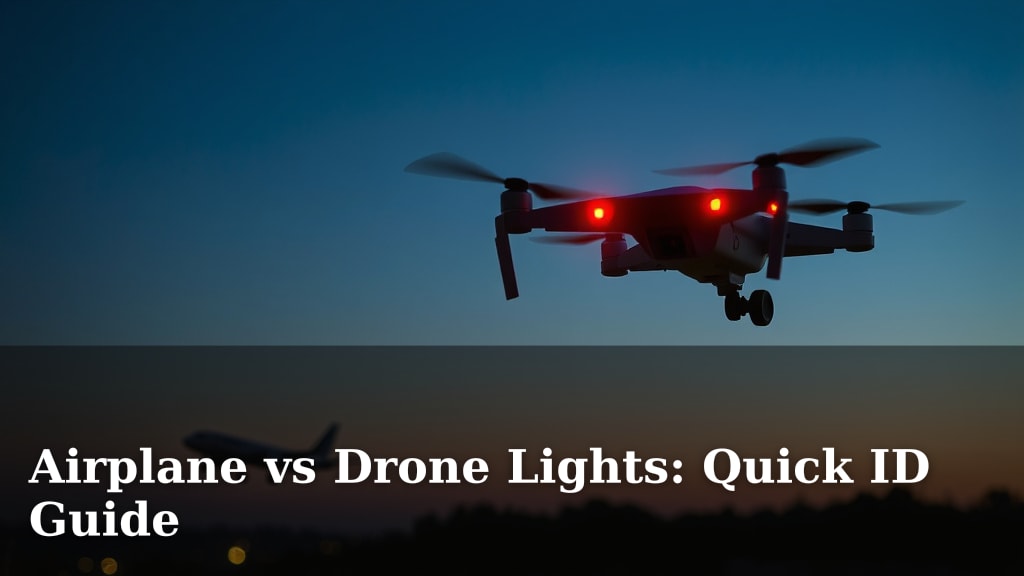
Airplane vs Drone Lights: Quick ID Guide
Spotting the difference between airplane lights and drone lights is usually pretty straightforward. Airplane lights are brightly colored and flash in a specific sequence, typically red, green, and white. Drone lights are often steadier and can be colored or white, serving more as identifiers or status indicators rather than navigation signals.
You might see blinking red and green lights on the wings of an airplane. That’s for air traffic control to know its direction. Drones use lights too, but they’re usually less intense and might just glow to show they’re active or change color to indicate flight mode. We found that understanding these patterns helps quickly tell them apart in the sky.
- Airplane lights are usually red, green, and white.
- They blink in a specific pattern for navigation.
- Drone lights are often steady and less intense.
- Drone lights can be white or colored to show status.
Let’s walk through exactly how to identify them so you’re never confused again.
Distinguishing Airplanes from Drones by Their Lights
Ever looked up at the night sky and wondered if that blinking light is a distant plane or a closer drone? It’s a common question, and thankfully, there are some clear indicators to help you tell them apart. We’ve found that understanding the purpose and pattern of these lights makes identification much easier.
Understanding Airplane Navigation Lights
Airplanes have a very specific set of lights for safety. These aren’t just for show; they’re essential for pilots to know where other aircraft are and in what direction they’re moving. Think of them as the cars’ headlights and taillights, but for the sky.
The Colors and Their Meanings
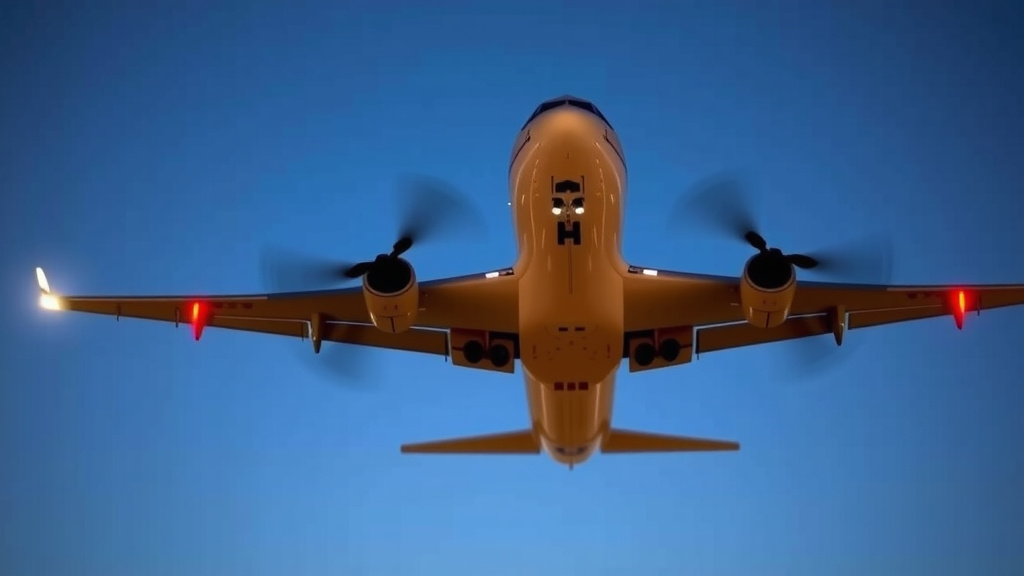
Airplane navigation lights are typically red, green, and white. You’ll usually see two colored lights on the wingtips and a white light on the tail. The red light is on the left wing (port side), and the green light is on the right wing (starboard side). The white light is at the rear of the aircraft.
The Blinking Sequence: A Key Identifier
These lights aren’t usually steady. They blink in a predictable sequence. The red and green lights flash, and often the white tail light also flashes or is steady, depending on the aircraft type and conditions. We found that observing the speed and pattern of these flashes is a strong clue. For instance, a flashing white light combined with red and green wingtip lights strongly suggests an airplane.
Intensity and Visibility
Airplane lights are designed to be seen from a great distance. They are quite bright and powerful, piercing through darkness and fog. This intensity is necessary for maintaining safe separation between aircraft in all weather conditions, as recommended by aviation authorities like the FAA.
Identifying Drone Lights
Drones, especially the ones you might see in your neighborhood or at events, have different lighting needs. Their lights usually serve as indicators rather than critical navigation signals. We found that the steadiness and color variety are the biggest giveaways.
Steady Lights and Status Indicators
Many drones use steady, solid lights. These often indicate that the drone is powered on and ready to fly, or they might show the current flight mode (e.g., GPS mode, return-to-home mode). You might see a steady white light, a steady green light, or a combination. These are less about direction and more about operational status.
Colored Lights for Differentiation
While some drones might have red and green lights, they often don’t flash in the same strict sequence as airplanes. Instead, these colors might be used to show the drone’s orientation or signal a warning. For example, a drone might have red lights facing forward and green lights facing backward, or vice-versa, to help you understand which way it’s pointing. Some larger drones might have more complex lighting systems, but for common recreational drones, the lights are generally simpler and less intense than aircraft lights.
Lower Intensity and Proximity
Generally, drone lights are much less intense than airplane lights. This is partly because drones operate at much lower altitudes. You’re more likely to see a drone up close, so its lights don’t need the same long-range visibility. We’ve noticed that drone lights often appear as softer glows rather than piercing beams.
A Quick Comparison Table
To make things even clearer, let’s look at a direct comparison. This table summarizes the key differences you’ll observe in the sky.
| Feature | Airplane Lights | Drone Lights |
|---|---|---|
| Primary Colors | Red, Green, White | White, Red, Green (often varied) |
| Flashing Pattern | Specific, consistent sequence for navigation | Often steady; colors may change for status |
| Intensity | Very bright, long-range visibility | Less intense, shorter-range visibility |
| Purpose | Navigation, determining direction and position | Status indication, orientation, operational mode |
| Typical Location | Wingtips (red/green), tail (white) | Various points on the drone body |
When in Doubt, Consider the Context
Where you are can also be a hint. If you’re near a major airport, the chances of seeing an airplane are much higher. If you’re in a park or a more open, residential area, a blinking light is more likely to be a drone. Many recreational drone operators follow guidelines to keep their aircraft away from airports, as recommended by the FAA for safety.
Your Quick ID Checklist
Here’s a quick checklist to help you identify those skyward lights:
- Is it flashing in a specific, rhythmic pattern? Likely an airplane.
- Are the lights bright red and green on the wingtips? Almost certainly an airplane.
- Are the lights steady and glowing, or changing colors simply? More likely a drone.
- Is the light source very intense and visible from miles away? Probably an airplane.
- Is it a softer glow, and are you relatively close to where you’re seeing it? Could be a drone.
By paying attention to these details, you can quickly figure out whether you’re looking at a commercial airliner or a personal quadcopter. It’s all about observing the patterns and colors!
Conclusion
You’ve learned how to tell airplanes and drones apart just by their lights. Remember, airplanes use bright, colored lights in a specific flashing sequence for navigation. Drones typically have steadier, less intense lights that show their status or orientation. We found that paying attention to these patterns makes identification quick and easy. Next time you see lights in the sky, you’ll know exactly what to look for to figure out if it’s a plane or a drone.
Frequently Asked Questions
Can drone lights ever look like airplane lights?
Yes, some larger drones might have red and green lights. However, they usually don’t flash in the same consistent, predictable navigation sequence as airplanes. Drone lights are often steadier or change colors to indicate operational status rather than direction.
What if I see a white flashing light in the sky?
A white flashing light could be either an airplane or a drone. If it’s part of a set of bright red and green wingtip lights flashing in a regular pattern, it’s very likely an airplane. If it’s a softer, steady white light, it’s more likely a drone indicating it’s powered on.
Are all airplane lights visible from very far away?
Airplane navigation lights are designed to be very bright and visible from a great distance. This is essential for safety, allowing pilots to see and avoid other aircraft in various conditions. Drone lights are generally much less intense because they operate at lower altitudes and closer proximity.
Can the color of drone lights tell me what it’s doing?
Sometimes! Many drones use steady colored lights to indicate their status. For example, a green light might mean it’s actively flying, while a red light could indicate a warning or low battery. The specific meaning of colors can vary by drone model.
Is it safe to fly drones near airports?
No, it is generally not safe or legal to fly drones near airports. Aviation authorities like the FAA have strict rules about drone operations in controlled airspace around airports to prevent interference with manned aircraft. Always check local regulations before flying.