Airplane vs Drone Lights: How to Tell the Difference
Have you ever looked up at the night sky and wondered whether that moving light was an airplane or a drone? You’re not alone. With the increasing popularity of recreational and commercial drones, more people are asking this exact question. The truth is, distinguishing between airplane lights and drone lights isn’t as difficult as you might think once you know what to look for.
In this comprehensive guide, I’ll walk you through the key differences that will help you confidently identify what’s flying overhead. Whether you’re a curious observer, a concerned homeowner, or simply someone interested in aviation and drone technology, this article will provide you with the knowledge you need.
Understanding the Basics of Aircraft Lighting
Commercial airplanes and smaller aircraft rely on a sophisticated lighting system for safe nighttime operation. These lights serve multiple purposes, from navigation to collision avoidance. Let me break down how this system works and what you should know about it.
Navigation Lights on Aircraft
Every aircraft, whether it’s a massive commercial jet or a small Cessna, is equipped with navigation lights. Think of these as the aircraft’s traffic signals in the sky. The left wing typically displays a red light, while the right wing shows a green light. These colors follow international maritime convention, which aviation adopted for consistency. The tail of the aircraft displays a white light.
The purpose of these colors is straightforward: they help other pilots quickly identify the direction and orientation of an approaching aircraft. If you see red, the plane is banking left. If you see green, it’s turning right. This system has been in place for decades and remains fundamental to aviation safety.
Beacon and Strobe Lights
Beyond navigation lights, aircraft have beacon lights and strobe lights. Beacon lights are usually positioned on the top and bottom of the fuselage and rotate or flash at regular intervals. These lights make aircraft visible from greater distances, especially in poor visibility conditions.
Strobe lights are the bright, intense flashing lights you often notice on commercial aircraft. They flash multiple times per second and are designed to make the aircraft more noticeable to other pilots. These lights are incredibly bright and can be seen from several miles away even in daylight conditions.
The Fundamentals of Drone Lighting Systems
Drones have revolutionized multiple industries, from photography to delivery services. However, their lighting systems are considerably simpler than those found on manned aircraft. Understanding drone lights is essential for accurate identification.
LED Lights on Drones
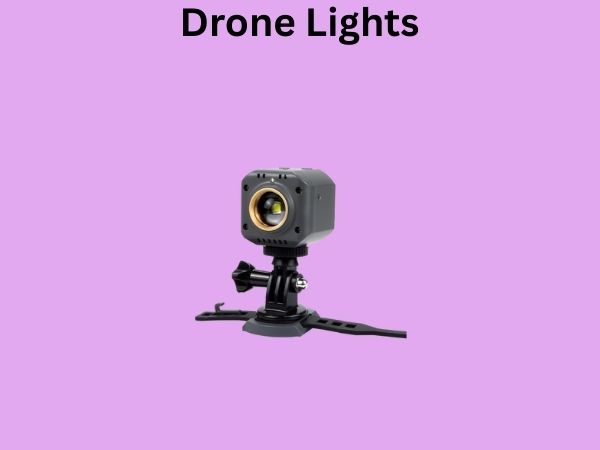
Most drones use LED lights because they’re lightweight, energy-efficient, and provide adequate visibility for the drone’s operational purposes. Unlike aircraft navigation lights, drone lights serve primarily to help the operator see the drone during flight and to assist with spatial awareness, especially during dawn, dusk, or nighttime operations.
Consumer drones typically have two or four LED lights, usually positioned on the landing gear or arms. These lights are much dimmer than aircraft lights because drones don’t need to be seen from miles away—they typically operate below 400 feet in altitude according to FAA regulations.
Light Configuration on Different Drone Models
The specific lighting setup varies depending on the drone manufacturer and model. DJI drones, for instance, often feature red and green lights on the front arms and white lights on the rear. This design choice mimics traditional aircraft navigation lighting but on a much smaller and dimmer scale.
- Small consumer drones have 2-4 LED lights
- Commercial drones may have additional lights for professional operations
- Racing drones have high-intensity LEDs for visibility during high-speed flight
- Professional mapping drones often have specialized lighting systems
Color Differences Between Airplane and Drone Lights
Color is one of the most reliable ways to distinguish between airplane and drone lights. Let’s examine what colors you’re likely to see and what they tell you.
Airplane Light Colors
As I mentioned earlier, aircraft display three primary light colors: red (left wing), green (right wing), and white (tail). Additionally, aircraft strobe lights and beacon lights are pure white or a very bright white-blue color. The brightness of these lights is what makes them so distinctive.
If you see alternating red and green lights moving across the sky in a coordinated pattern, you’re almost certainly looking at an airplane. The colors remain consistent because they’re mandated by international aviation regulations.
Drone Light Colors
While some drones do have red and green lights similar to aircraft, the overall pattern is different. Drone lights tend to be dimmer and less synchronized than airplane lights. You might see a combination of red, green, and white, but the intensity will be noticeably lower.
Some consumer drones have only red and green lights without the white tail light, making them distinct from properly equipped aircraft. Additionally, certain drone models use only white or a combination of white and one other color.
Movement Patterns and Flight Behavior
How an object moves through the sky tells you a lot about what it is. Movement patterns are among the most reliable indicators for distinguishing aircraft from drones.
Airplane Movement Characteristics
Airplanes move in relatively straight lines at constant speeds. They don’t hover in one spot, and they don’t make abrupt directional changes. When an airplane turns, it does so gradually and predictably. Think of it like a train on rails—it has a predetermined flight path and follows it consistently.
Commercial aircraft particularly follow established flight corridors and approach patterns to major airports. If you live near an airport, you’ll notice planes appear from the same general direction and maintain similar flight paths night after night.
Drone Movement Characteristics
Drones, by contrast, are incredibly maneuverable. They can hover in one spot indefinitely, move in any direction, accelerate or decelerate rapidly, and make sharp 90-degree turns without banking. A drone can move sideways, backward, or straight up without changing its orientation.
If you observe a light source that hovers motionless for several minutes, then suddenly darts in a different direction at an impossible angle for an airplane, you’re watching a drone. This agility is perhaps the single most telling characteristic.
Brightness and Intensity Comparison
The brightness of a light source provides crucial information about what you’re observing. There’s a significant difference in light intensity between airplanes and drones.
Aircraft Light Brightness
Aircraft lights are extraordinarily bright. Strobe lights on commercial aircraft can be seen from 10 miles away or more, even during daylight hours. This extreme brightness is necessary because safety is paramount in aviation, and these lights need to be visible to other pilots from considerable distances.
When you see an airplane at night, the brightness is often startling. The flashing strobe lights create a pulsing effect that immediately draws your attention. This intensity is difficult to miss and serves as an immediate indicator that you’re observing something large and high in the sky.
Drone Light Brightness
Drone lights are substantially dimmer. Since drones operate at low altitudes and the operator is typically within a few thousand feet, the lights don’t need to be visible from great distances. The LEDs on consumer drones are bright enough to help the operator maintain visual contact but nothing approaching the intensity of aircraft lights.
If you observe a light that’s relatively dim, moves slowly, and doesn’t have the intense flashing quality of strobe lights, you’re likely looking at a drone rather than an airplane.
Speed and Altitude Indicators
The speed at which a light moves across the sky and how high it appears are additional factors that help identify what you’re observing.
Airplane Speed and Altitude
Commercial aircraft cruise at approximately 500-550 miles per hour at altitudes between 30,000 and 35,000 feet. Small general aviation aircraft fly much slower, typically between 100-200 miles per hour, at lower altitudes ranging from 1,000 to 10,000 feet.
The light you observe will move noticeably across the sky at a steady pace. You might be able to track an airplane’s progress from one side of the sky to another in just a few minutes. At great altitudes, the movement appears slower simply because of distance, but it’s still consistent and predictable.
Drone Speed and Altitude
Consumer drones typically have maximum speeds of 35-45 miles per hour, though racing drones can exceed 100 miles per hour. More importantly, drones operate well below aircraft altitudes. The FAA restricts recreational drones to 400 feet above ground level, and many operate at even lower altitudes.
If you observe a light moving very slowly across the sky or appearing to hover in one location, it’s far more likely a drone than an airplane. The slow, deliberate movement is a dead giveaway.
Blinking Patterns Explained
The pattern of blinking or flashing provides one of the most definitive ways to tell aircraft and drones apart. Let me explain the different patterns you might observe.
Aircraft Blinking Patterns
Aircraft lights blink with remarkable consistency and regularity. Strobe lights typically flash between 40-60 times per minute, creating a rhythmic, synchronized pattern. Beacon lights also follow a consistent pattern, usually flashing once or twice per second.
The key characteristic is regularity. If you count the flashes, you’ll find the pattern repeats predictably. This consistency is intentional—it makes aircraft easier to spot and track, whether by human observers or by other aircraft’s collision avoidance systems.
Drone Blinking Patterns
Drone lights don’t typically blink in the same synchronized, rapid manner as aircraft strobe lights. Some drones have lights that blink slowly or continuously, but the pattern is usually simpler. Many drone lights simply remain steady rather than blinking at all.
If you observe a light source with a rapid, consistent strobing pattern visible from great distances, it’s almost certainly an airplane. If the light is dim and either steady or blinking slowly, it’s likely a drone.
Sound as a Distinguishing Factor
While we’re focusing on visual identification, it’s worth mentioning that sound can provide valuable corroborating evidence.
Aircraft Noise
Aircraft generate significant noise, especially commercial jets. The sound of jet engines is distinctive and unmistakable—a deep, loud roar that can be heard from considerable distances. Even small general aviation aircraft produce noticeable engine sounds.
If you hear a loud roaring or humming sound associated with the lights you’re observing, you’re definitely watching an airplane. The noise and visual confirmation together make identification certain.
Drone Noise
Drones produce a high-pitched whirring or buzzing sound from their propellers. This sound is much quieter than aircraft engines and has a distinctly different character. Most drones can only be heard from relatively close distances.
If you observe lights but hear no sound, it’s likely an airplane too high to produce audible noise from your location, or a very distant airplane. If you hear a faint buzzing sound, you’re probably watching a drone relatively nearby.
Common Misconceptions
There are several myths and misunderstandings about airplane and drone lights that I want to address directly.
Misconception: Drones and Planes Have Identical Lighting
This simply isn’t true. While some drones do incorporate red and green navigation-style lights, the overall system is quite different. Aircraft lights are brighter, blink more rapidly and consistently, and follow strict international standards. Drone lights are simpler, dimmer, and more variable depending on the manufacturer.
Misconception: All Hovering Lights Are Drones
While hovering is a strong indicator of a drone, helicopters can also hover. However, helicopters produce very distinctive rotor sounds and have larger, more visible light patterns. If something hovers silently and its lights are dim, a drone is far more likely than a helicopter.
Misconception: Red Lights Always Mean Airplanes
Red lights can appear on both aircraft and drones. The difference is that on aircraft, red lights appear on the left wing specifically and are part of a coordinated three-light system. On drones, red lights might appear anywhere depending on the model and aren’t necessarily part of the same standardized system.
Misconception: Drones Are Always Silent
While drones are quieter than aircraft, they’re not completely silent. Modern drones produce an audible buzzing or whirring sound from their propellers. The newer, more advanced models might be quieter, but they still produce some noise.
When to Report Suspicious Activity
Now that you know how to identify drones versus airplanes, you might wonder when you should report what you observe.
Activity Worth Reporting
Report drone activity to local law enforcement if:
- A drone is flying at night without visible lights
- A drone repeatedly flies over your property at unusual hours
- A drone appears to be actively surveilling your home or a critical infrastructure facility
- A drone is flying significantly higher than the 400-foot legal limit and appears to be a consumer model
- A drone operates near an airport or military installation
Activity That Doesn’t Require Reporting
Planes and helicopters flying overhead at normal altitudes and times are routine and don’t require reporting. Commercial drone operations with proper authorization are also normal. Simply seeing drone lights or airplane lights in the sky is not cause for concern unless the activity appears truly unusual or dangerous.
Practical Tips for Night Sky Observation
If you want to become better at identifying these aircraft, here are some practical tips for observing the night sky.
Create an Observation Log
Keep a notebook nearby and record details about what you observe: the time, direction, color of lights, brightness, movement pattern, and any sounds. Over time, you’ll develop pattern recognition skills that make identification intuitive.
Use Available Technology
Download flight tracking apps like FlightRadar24 or Flightradar. These apps show real-time airplane positions, altitudes, and flight paths. When you see lights, check the app to see if an airplane is in that location. This provides instant confirmation and helps train your observational skills.
Learn Your Local Flight Patterns
If you live near an airport, learn the standard flight paths and approach patterns. Airplanes consistently follow the same routes.