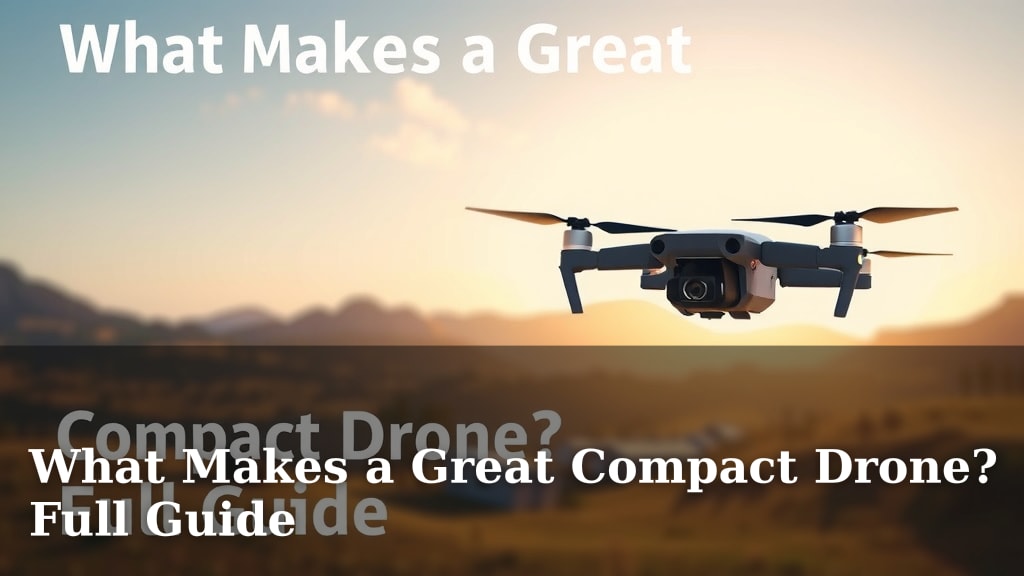
What Makes a Great Compact Drone? Full Guide
A great compact drone offers a balance of portability and performance. You want something that’s easy to carry but still delivers excellent flight stability and image quality. Think of it as a tiny powerhouse for your aerial adventures.
Choosing the right compact drone means looking beyond just its size. We found that factors like battery life, camera resolution, and ease of use are just as important. It should feel like a natural extension of your creativity, not a complicated gadget.
- Portability: Fits easily in a backpack.
- Flight Performance: Stable in wind, easy to control.
- Camera Quality: Sharp photos and smooth video.
- Battery Life: Enough flight time for your needs.
- User-Friendliness: Simple setup and operation.
So, let’s break down what really makes a compact drone a winner, and how you can find the perfect one for your travels and creative projects.
What Makes a Compact Drone Truly Great?
You’re looking for a drone that’s small but mighty. It needs to fit into your life without a fuss. But what actually separates a good compact drone from a fantastic one? We’ve dug into this question. We found that a great compact drone is all about hitting the sweet spot. It offers portability without sacrificing flight or image quality. It’s a travel buddy and a creative tool rolled into one.
Portability: The Pocket-Sized Powerhouse
The biggest draw of a compact drone is its size. You want something that disappears into your backpack or even a large jacket pocket. This means looking at folded dimensions and overall weight. Many compact models are designed to fold up neatly. They often come with their own carrying cases too. This makes them incredibly convenient for spontaneous trips.
Size and Weight Considerations
When we talk about “compact,” we’re generally looking at drones that weigh less than 250 grams. This is a key number for a few reasons. For one, it often means you don’t need to register it with aviation authorities in many places. Plus, less weight means easier carrying. Some of the best mini drones can feel almost like a smartphone in your pocket. That kind of portability is a huge win.
Foldable Designs: A Smart Space Saver
Many top compact drones feature foldable arms. This is a brilliant design choice. It dramatically reduces their footprint when not in use. Think about it: a drone that’s only a few inches long when folded. It can slide into a side pocket of your camera bag. This makes it super accessible for when you spot that perfect shot.
Flight Performance: Staying Stable and in Control
Just because a drone is small doesn’t mean it should be a shaky mess. A great compact drone offers surprisingly stable flight. This is thanks to advanced internal sensors and GPS. You want a drone that can hover precisely. It should also handle light breezes without drifting away. Responsive controls are another big deal. You need to feel connected to the drone.
GPS and Stabilization Technology
Most good compact drones use GPS (Global Positioning System) and GLONASS. These systems help the drone know exactly where it is in the sky. They anchor it in place, even if there’s a bit of wind. This GPS locking is essential for smooth footage. It also makes flying much easier for beginners. Many models also have downward sensors for better hovering indoors or at low altitudes.
Ease of Control: From Beginner to Pro
A key factor is how easy the drone is to fly. Many compact models are designed with beginners in mind. They have intuitive controls via a smartphone app. You might also pair them with a small, dedicated remote controller. We found that the best ones offer a good balance. They’re simple enough to pick up quickly, but offer enough control for more experienced pilots to get creative.
Camera Quality: Capturing Your World in High Definition
This is where many compact drones truly shine. Manufacturers have packed impressive cameras into these small bodies. You can expect sharp photos and smooth, high-definition video. Don’t let the size fool you; the image quality can rival much larger drones.
Resolution and Frame Rates for Photos and Videos
When looking at camera specs, pay attention to resolution. For photos, 12-megapixel or higher is common and delivers great detail. For video, 4K resolution is becoming standard. This means crystal-clear footage. Look for frame rates like 30 frames per second (fps) for smooth playback. Some advanced models even offer higher frame rates for slow-motion effects. You want images that pop.
Gimbal Stabilization: Smooth as Silk Footage
A tiny drone can still produce professional-looking video. This is thanks to a motorized gimbal. Most good compact drones feature a 3-axis gimbal. This smooths out any bumps or shakes from the drone’s movement. It keeps your camera level and your footage steady. We found that a good gimbal makes a massive difference. It turns wobbly shots into cinematic-looking clips.

Battery Life: How Long Can You Fly?
Battery life is always a concern with any drone. For compact models, it’s particularly important because they have smaller batteries. However, technology has advanced significantly. You can find compact drones offering 20-30 minutes of flight time on a single charge. This is often enough for most casual users. Having extra batteries is always a smart move, though.
Flight Time Per Battery
Aim for at least 15-20 minutes of flight time per battery. This allows you to get some good shots without constantly worrying about landing. Some top-tier compact drones push this even further. They might offer closer to 30 minutes per charge. Always check the manufacturer’s specifications, but remember this is usually under ideal, wind-free conditions.
Charging and Swapping Batteries
Consider how quickly the batteries charge. Some come with multi-battery charging hubs, which are super handy. Being able to charge 2 or 3 batteries at once saves a lot of time. Swapping batteries should also be a quick and easy process. You don’t want to spend more time changing batteries than flying.
User-Friendliness: Getting Started Without the Headache
A great compact drone should be accessible. You shouldn’t need an engineering degree to get it flying. Look for intuitive apps, clear instructions, and straightforward setup. This is especially important if you’re new to drones.
App Integration and Controls
Most compact drones connect to your smartphone via an app. This app is your control center. It shows you the camera feed, battery status, and flight data. We found that well-designed apps make flying a joy. They offer simple controls and helpful tutorials. Look for apps with clear layouts and responsive virtual joysticks.
Beginner Modes and Safety Features
Many drones include beginner modes. These limit speed and altitude to help new pilots get comfortable. Return-to-home (RTH) is a vital safety feature. If the drone loses signal or the battery gets low, it will automatically fly back to its takeoff point. This is a real peace of mind feature.
What to Look For in a Checklist: Your Quick Guide
Ready to find your perfect compact drone? Keep this quick checklist in mind:
- Check the Folded Size: Does it easily fit where you want it to?
- Review Flight Time: Is it at least 15-20 minutes per battery?
- Examine Camera Specs: Aim for 4K video and sharp stills.
- Gimbal Stability: Ensure it has a 3-axis gimbal for smooth footage.
- Ease of Use: Does the app and control system seem intuitive?
- Safety Features: Is Return-to-Home included?
Conclusion
You’ve learned that a great compact drone is a smart blend of portability and powerful features. We found that key elements like stable flight from GPS, clear 4K video from a stabilized gimbal, and user-friendly app controls make a big difference. Don’t forget to check battery life and ensure it folds up neatly for your adventures. Now you’re ready to find the perfect drone that fits your needs and budget. Happy flying!
Frequently Asked Questions
Are compact drones good enough for professional photography?
For many casual or semi-professional uses, yes. Compact drones offer excellent 4K video and sharp stills. While they might not replace larger cinema drones for complex productions, they’re perfect for travel vlogs, social media, or capturing stunning landscapes on the go.
Do I need a license to fly a compact drone under 250 grams?
In most places, drones under 250 grams do not require a pilot’s license or registration. This is a major advantage of choosing a lightweight compact model. Always check your local aviation authority’s rules before flying, as regulations can vary by region.
How much flight time should I expect from a good compact drone?
We found that the best compact drones typically offer between 20 to 30 minutes of flight time per battery. While some might offer less, aim for at least 15-20 minutes to get enough footage. Consider buying extra batteries for longer outings.
Can compact drones handle windy conditions?
Most good compact drones are equipped with GPS and stabilization technology that helps them maintain a stable position, even in light winds. However, very strong gusts can still affect their flight. Always check the weather and fly in calm conditions for the best results.
Is it hard to learn how to fly a compact drone?
No, most compact drones are designed with user-friendliness in mind. They often come with intuitive smartphone apps and beginner modes. Features like Return-to-Home make them much easier and safer for new pilots to learn.