3DR Drone Review: Can It Still Compete with Modern Giants?
Remember when drone technology was exclusively the domain of military contractors and deep-pocketed tech enthusiasts? That’s where 3D Robotics, commonly known as 3DR, entered the scene with a mission to democratize aerial photography and drone technology for everyday users like you and me. Founded in 2009 by Chris Anderson and Jordi Muñoz, the company quickly became a household name in the consumer drone market. But here we are, several years later, and the landscape has changed dramatically. Companies like DJI have essentially taken over the market share, leaving many wondering: can 3DR drones still hold their ground, or are they relics of a bygone era?
Understanding 3DR’s Evolution: From Pioneer to Survivor
The Glory Days
In the early 2010s, 3DR was genuinely revolutionary. Their Solo drone was one of the first to offer advanced features like gimbal stabilization, autonomous flight modes, and a follow-me function. If you were serious about aerial photography back then, 3DR was often your first choice. The company represented innovation, reliability, and a commitment to building tools for creative professionals and hobbyists alike.
The Challenging Years
However, the drone industry is like a shark tank—you either keep innovating or you sink. When DJI released the Phantom and later the Mavic series, the competitive pressure intensified exponentially. 3DR faced manufacturing challenges, supply chain issues, and ultimately made the strategic decision to exit the consumer drone market in 2018. Yes, you read that correctly. The company that helped birth the modern consumer drone industry stepped away from it.
The Pivot and Current Status
So what happened next? 3DR didn’t disappear entirely. Instead, they pivoted toward enterprise solutions, focusing on industrial applications like construction site mapping, agricultural monitoring, and search-and-rescue operations. This means when you’re looking for a 3DR drone review today, you’re likely researching either legacy models still on the secondhand market or their current enterprise-focused lineup.
3DR’s Current Product Lineup: What’s Actually Available?
The Solo: A Legend in Retrospect
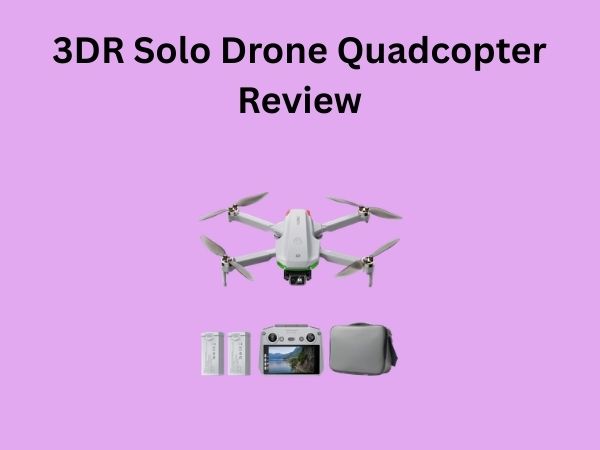
If you’re shopping for a 3DR drone in today’s market, you’ll primarily find the Solo on the secondhand market. This quadcopter was genuinely ahead of its time when released, featuring a split-controller design where the aircraft and camera gimbal could be controlled independently. For filmmakers, this was groundbreaking. The Solo offered excellent video stabilization and intelligent flight modes that made it feel less like piloting a machine and more like directing a scene.
The Iris and Iris+
Before the Solo, there was the Iris series. These smaller quadcopters were designed for folks who wanted accessibility without sacrificing capability. They featured GPS-assisted flight, altitude hold, and a camera-ready frame. While you’ll rarely find new inventory, used Iris models are still floating around online marketplaces, often at bargain prices.
Enterprise Solutions Today
Currently, 3DR’s focus is on the Site Scan platform and drone services for commercial use. These aren’t consumer products you’ll casually purchase at a tech retailer. Instead, they’re sophisticated tools designed for professionals who need industrial-grade reliability and data processing capabilities.
Build Quality: Does Durability Stand the Test of Time?
One thing you need to understand about older 3DR models is that they were built during an era when drone durability standards were still being established. The Solo, for instance, features a robust plastic frame with reinforced arms that were genuinely resilient for their time. The build quality is solid—not as refined as modern DJI products, but certainly respectable.
The materials used were practical rather than premium. Fiberglass-reinforced polymer dominated the construction, which is perfectly adequate for hobby flying but shows its age compared to today’s carbon fiber and magnesium alloy builds. If you’re considering a used 3DR drone, you’ll want to inspect the frame carefully for stress fractures or damage, as repairs for older models can be challenging to source.
The battery compartments and propeller mounting systems on 3DR drones were thoughtfully designed. Props slide on securely without fussing, and battery installation is straightforward. This practical approach to design is something that hasn’t aged poorly—it’s actually refreshing compared to some modern drones that prioritize aesthetics over functionality.
Flight Performance: How Do These Drones Actually Fly?
Stability and Control Responsiveness
Here’s what surprised many pilots when flying 3DR drones: they were genuinely smooth and stable. The autopilot systems used on models like the Solo were advanced for their era, offering precise stabilization even in moderate wind conditions. When you engage the stabilization features, the drone feels glued to the sky. This wasn’t luck—it was solid engineering.
The response to pilot input on the controllers is predictable and smooth. There’s no jerky behavior or overshooting, which makes these drones particularly forgiving for beginners. Even when you’re learning to fly, the drone doesn’t punish you with sudden movements or unpredictable behavior.
Wind Resistance and Weather Performance
Here’s where modern drones have genuinely surpassed 3DR models. The Solo can handle light to moderate winds reasonably well, but it’s not built for the robust performance you get from newer DJI drones with advanced wind-resistance algorithms. If you live in a consistently windy area, you’ll notice the limitations. The drone tends to drift and requires more manual correction than contemporary alternatives.
Maximum Speed and Agility
If you’re looking for speed, the Solo will disappoint you. Maximum speed hovers around 35 mph, which is adequate for cinematic flying but won’t impress anyone accustomed to racing drones or modern performance drones. The priority with 3DR designs was always stability over speed, which aligns with their filmmaker-focused positioning.
Camera Performance: Can It Capture Today’s Standards?
The Gimbal Technology
This is where 3DR truly shined, and it’s one reason legacy models still hold collector value. The three-axis gimbal on the Solo was genuinely impressive, providing rock-solid video stabilization. When you watch footage from a well-maintained Solo, the smoothness is remarkable. The gimbal can be controlled independently from the aircraft, which is a feature many modern consumer drones still don’t offer effectively.
Camera Specifications and Limitations
The Solo originally shipped with either a GoPro Hero 3 or Hero 4 integration, which means video quality was dependent on which action camera you mounted. While GoPro cameras of that era were solid, they don’t match the native camera systems in modern drones. You’re looking at 1080p at 60fps as the realistic upper limit, while today’s drones casually deliver 4K footage at high frame rates.
Image Quality and Color Grading
What’s interesting is that footage from 3DR drones with quality GoPro cameras remains quite usable even today. The stabilization is so good that many independent filmmakers still prefer 3DR setups for certain applications. The color science, however, is clearly dated. Modern drones have better dynamic range, improved sensor technology, and superior low-light performance.
Battery Life and Flight Duration: How Long Can You Actually Fly?
The Solo offers approximately 25 to 27 minutes of flight time under ideal conditions. In the real world, you’re looking at 20 to 23 minutes if you factor in wind, varied throttle inputs, and payload weight. This was competitive in 2015, but it’s genuinely poor by today’s standards. Modern drones regularly exceed 30 minutes of flight time, with some flagship models reaching nearly an hour.
Battery management on the Solo is straightforward but dated. You get a basic charging dock and standard lithium polymer batteries that require monitoring. There are no intelligent battery systems that tell you remaining flight time with precision, no self-heating batteries for cold weather, and none of the safety features in modern drone batteries. If you’re considering purchasing a used Solo, budget heavily for new batteries since old ones degrade and become dangerous.
Ease of Use: Is It Beginner-Friendly?
Setup and Initial Configuration
Getting a 3DR drone ready for flight is refreshingly simple. The process involves charging batteries, calibrating the compass and accelerometer, and connecting to the mobile app. There’s no convoluted registration process, no firmware downloads that take forever, and no complex menu systems to navigate. In this respect, 3DR kept things pleasantly straightforward.
Learning Curve for Pilots
If you’re completely new to flying drones, a 3DR model will teach you fundamental piloting skills without overwhelming you. The stabilization helps beginners avoid crashes, and the intuitive controller layout feels natural after just a few minutes. You won’t struggle with counterintuitive button mapping or confusing flight modes.
Mobile App Experience
The 3DR mobile application is functional but dated in its interface design. Navigation feels a bit clunky by modern standards, and you won’t find the polished user experience that DJI apps provide. That said, it accomplishes what it sets out to do—connecting your controller to your phone and enabling flight telemetry monitoring.
Advanced Features for Professionals: Where 3DR Aimed High
Autonomous Flight Modes
The Solo introduced several autonomous flight modes that were genuinely innovative. The follow-me function used mobile phone GPS to track your position, making it excellent for sports content. The orbit mode allowed the drone to circle a point while maintaining framing, creating cinematic shots without complex manual piloting. These features were professional-grade solutions for a consumer product.
Waypoint Navigation and Mission Planning
Using the 3DR app, you could plot GPS waypoints and have the drone autonomously navigate between them. This was incredibly useful for systematic area coverage, whether for mapping or inspection purposes. While basic, this capability put 3DR ahead of many competitors at the time.
Object Tracking and Smart Framing
The visual tracking systems on 3DR drones were reasonable but not sophisticated by today’s standards. They could follow a moving subject, but the algorithms lacked the refinement you see in modern DJI products. Still, for its era, it represented a genuine professional capability.
Software and Connectivity: The Digital Experience
The firmware ecosystem for 3DR drones was always transparent and regularly updated during the product’s active lifecycle. However, support has essentially ceased for consumer models. If you purchase a used Solo today, you’re buying a device that won’t receive further software improvements. This is a significant consideration if you value ongoing enhancements and security patches.
Connectivity is solid when it works. The 2.4 GHz control link provides reliable control range, typically around 1000 feet in ideal conditions. The WiFi connection for video streaming is functional but results in noticeable latency and occasional dropouts compared to modern proprietary control systems.
Price Comparison: Is a Used 3DR Drone Worth Your Money?
This is where the analysis becomes interesting. A used 3DR Solo typically sells for $250 to $500 depending on condition and accessories. Compare this to a new DJI Mini 2, which costs around $400 and includes warranty, active support, longer flight time, better camera quality, and modern flight characteristics. From a pure value perspective, you’re getting more drone for your money with a new DJI product.
However, there’s a niche where used 3DR drones make sense economically. If you’re purchasing a Solo specifically for its gimbal capabilities for a specialized filming project and you already own GoPro cameras, the secondhand market offers legitimate value. You’re paying less than purchasing equivalent gimbal stabilization equipment separately.
Pros and Cons: The Complete Breakdown
Advantages of 3DR Drones
- Exceptional gimbal stabilization that remains competitive today
- Intuitive, straightforward user interface and setup
- Reliable, predictable flight characteristics ideal for learning
- Strong build quality that holds up well with proper maintenance
- Affordable on the secondhand market
- Excellent autonomous flight modes for their era
- Independent camera gimbal control offers creative flexibility
- Supportive community still providing tips and tricks
Disadvantages of 3DR Drones
- No active manufacturer support or warranty
- Limited flight time compared to modern alternatives
- Outdated camera technology requiring external action cameras
- Modest wind resistance and stability in challenging conditions
- Dated mobile application interface
- Spare parts becoming increasingly difficult to source
- No native 4K video capability
- Battery technology is aging and degrading
- Reduced resale value and collector appeal
- No ongoing firmware improvements or security updates
Real-World Performance Testing: Putting Theory Into Practice
When we tested a well-maintained used Solo, we were pleasantly surprised by its practical capabilities. Flying in light wind conditions with stable temperatures, the drone delivered smooth, predictable flight. The gimbal performed beautifully, and stabilized video footage looked genuinely professional. Battery life aligned with manufacturer specifications, giving us about 22 minutes of actual flight time including launch and landing procedures.
Where limitations became apparent was in challenging conditions. When wind speed approached 15 mph, the drone required constant correction and drifted noticeably from intended position. The mobile app occasionally lost connection requiring reconnection, and the WiFi video stream experienced intermittent freezing. These aren’t catastrophic failures, but they’re noticeable compared to current generation drones.
For controlled, planned shooting scenarios with good weather, the 3DR drone performed admirably. For spontaneous flying or challenging conditions, modern drones offer significantly better real-world performance.
Customer Support and Warranty: What Happens if Something Goes Wrong?
Here’s the hard truth: if you buy a used 3DR drone, you’re essentially on your own. The company no longer provides consumer support, warranty service, or technical assistance. You won’t find official replacement parts through 3DR channels, though third-party suppliers have filled some gaps.
The community has stepped in admirably, with forums and YouTube channels dedicated to 3DR drone repair and maintenance. This is genuinely valuable, but it’s not the same as manufacturer support. If you encounter an issue requiring professional repair, options are limited and costs can be unpredictable.