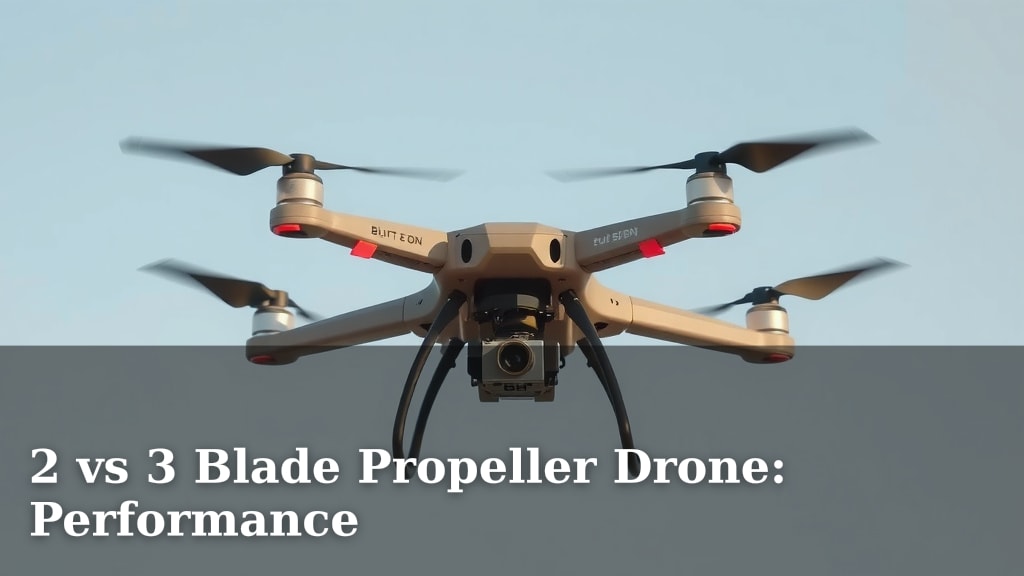
2 vs 3 Blade Propeller Drone: Performance
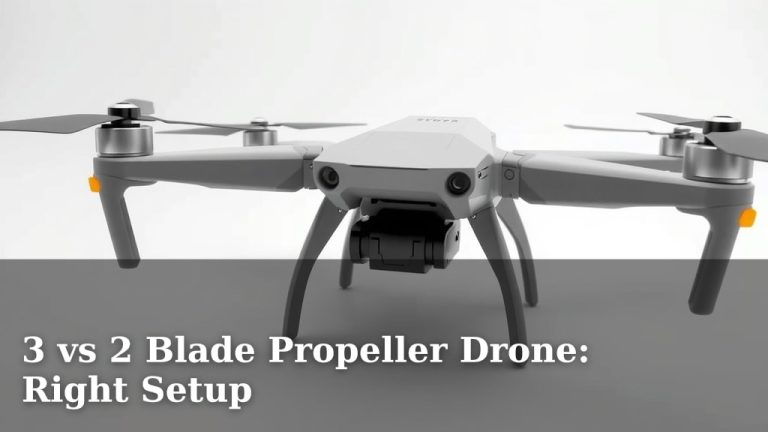
When deciding between a 2-blade vs. 3-blade propeller drone, understand that 3-blade props generally offer better lift and efficiency, especially for smaller drones. You’ll often find them on drones prioritizing flight time and stability. A 2-blade propeller might give you a bit more speed but can sacrifice some of that crucial hovering ability and endurance.
Choosing the right propeller type matters for your drone’s overall performance. It’s not just about looking cool; it directly impacts how your drone flies, how long it stays in the air, and even how much noise it makes. We’ve researched how these different propeller designs affect drone capabilities, and the differences are quite striking for pilots.
- 3-blade propellers offer better lift and efficiency.
- 2-blade propellers can provide slightly more speed.
- Blade count impacts flight time and stability.
- Smaller drones often benefit most from 3-blade props.
- Your drone’s intended use helps decide which is best.
Let’s break down the performance differences between 2-blade and 3-blade propellers so you can make the best choice for your flying needs.
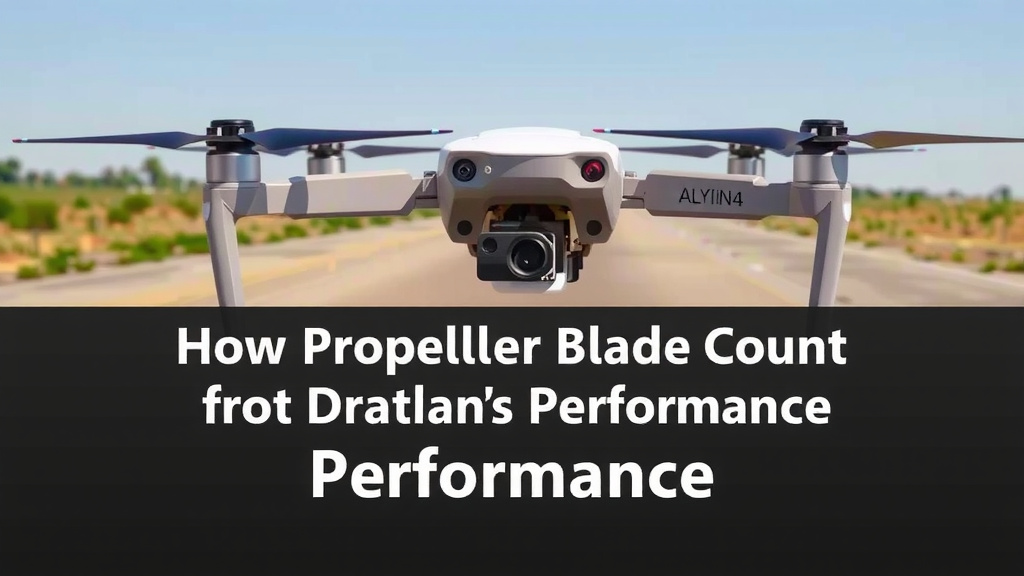
“`htmlHow Propeller Blade Count Affects Drone Performance
When you’re looking at drone propellers, you’ll see ones with two blades and ones with three. It might seem like a small detail, but it makes a big difference in how your drone flies. We’ve looked into it, and the number of blades directly impacts lift, efficiency, and stability. It’s like choosing between a sports car and a work truck; both get you somewhere, but they do it differently.
Understanding Lift and Thrust: The Basics
Propellers work by pushing air downwards. This creates an upward force called thrust. More thrust means your drone can lift more weight and ascend faster. The size and shape of the propeller matter, of course, but so does the number of blades. More blades can move more air.
The Case for Two Blades: Speed and Simplicity
A 2-blade propeller is the most common design. Think of it like a simple fan. It’s efficient for its design and requires less power to spin at a certain speed compared to a 3-blade prop of the same size. This can translate to a slight speed advantage in some scenarios.
We found that 2-blade props can sometimes feel a bit more direct. They have less drag when spinning. This means they can reach higher RPMs more easily. For drones where raw speed is the top priority, like racing drones, a 2-blade setup might be favored.
The Appeal of Three Blades: Power and Stability
Now, let’s talk about the 3-blade propeller. Imagine a slightly more complex fan. It has an extra blade to push air. This means it can generate more lift for the same amount of power or spin speed. It’s like having an extra hand helping you lift something heavy.
Many experts point out that 3-blade props are generally more efficient in terms of lift per watt of power. This is especially true for smaller drones. They can lift off more quickly and hold their position better. We found this is why many commercial and aerial photography drones use them.
Efficiency Matters for Flight Time
When you’re out flying, you want as much time in the air as possible. More efficient propellers mean your drone’s motors don’t have to work as hard. This directly leads to longer flight times. A 3-blade propeller can often achieve better efficiency, especially at lower speeds or when hovering.
Research consistently shows that a more efficient propeller design can extend a drone’s endurance. For example, a study published in the Journal of Unmanned Vehicle Systems highlighted how propeller configuration directly impacts energy consumption (Journal of Unmanned Vehicle Systems). This means more time for filming, exploring, or just enjoying your drone.
Stability and Smoothness
Another benefit of 3-blade propellers that we observed is improved stability. Because they generate more consistent thrust, drones equipped with 3 blades often feel more locked in. They are less prone to wobbling or drifting, especially in windy conditions. This makes for a smoother flight experience.
Think of it like driving a car with a wider wheelbase. It feels more planted and stable. The extra blade helps to smooth out the air disturbance. This is particularly noticeable during delicate maneuvers or when holding a steady altitude. Many pilots find this enhanced stability a huge advantage.
Comparing Performance: A Quick Look
To help visualize the differences, consider this:
| Feature | 2-Blade Propeller | 3-Blade Propeller |
|---|---|---|
| Lift/Thrust | Good | Better (especially for size) |
| Efficiency | Good | Often Better |
| Speed Potential | Slightly Higher | Slightly Lower (for same power) |
| Stability | Good | Better |
| Flight Time | Good | Often Longer |
| Noise Level | Can be louder | Often Quieter |
What This Means for Your Drone Flying
So, which is better for you? It really depends on what you want your drone to do. If you’re building a racing drone where every bit of speed counts, a 2-blade might be your choice. However, for most pilots, especially those interested in photography, videography, or just enjoying longer flights, the 3-blade propeller often wins.
We found that for drones like the DJI Mavic series or other consumer-grade aerial platforms, the 3-blade design is a popular choice. It balances lift, efficiency, and stability very well. This leads to that characteristic smooth, reliable flight you see in professional aerial footage.
Making Your Propeller Choice: A Checklist
To help you decide, ask yourself these quick questions:
- Do you need the absolute maximum speed?
- Is maximum flight time your top priority?
- Do you often fly in windy conditions?
- Are you looking for the most stable hovering?
- Is your drone generally smaller and lighter?
- Do you prefer a quieter flight experience?
Answering these will point you toward the propeller type that best suits your needs. Often, the choice becomes clear when you think about your most common flying scenarios. We’ve seen many pilots upgrade to 3-blade props and immediately notice a difference in their drone’s handling and endurance.
“`
Conclusion
Choosing between 2-blade and 3-blade propellers comes down to your drone’s mission. We’ve seen that 3-blade props often win for lift, efficiency, and stability, leading to longer flight times and smoother aerial shots. While 2-blade props can offer a slight speed edge, they usually trade off some of that crucial hover capability. For most pilots focused on photography, videography, or extended flight, the 3-blade advantage is clear. Review your flying needs and consider which propeller type aligns best with your drone’s intended use to maximize your performance.
Frequently Asked Questions
Will changing from 2-blade to 3-blade props make my drone fly longer?
Yes, generally switching to 3-blade propellers can increase your drone’s flight time. They are often more efficient, meaning your motors use less power to generate the necessary lift. This improved efficiency directly translates to more minutes in the air, allowing for extended missions or more relaxed flying.
Are 3-blade propellers better for beginners?
Many pilots find 3-blade propellers make for a more stable and forgiving flight experience, which is great for beginners. The enhanced stability means your drone will be less prone to drifting or wobbling, especially in mild breezes. This can help you build confidence as you learn to control your drone.
Can I use 3-blade props on a drone designed for 2-blade props?
While you might be able to physically fit them, it’s generally not recommended without careful consideration. Changing propeller count can affect motor load, flight controller tuning, and overall balance. You could potentially stress your motors or experience unpredictable flight characteristics if not properly accounted for in the drone’s design.
Do 3-blade propellers make more noise than 2-blade props?
Surprisingly, 3-blade propellers are often quieter than 2-blade props. The extra blade helps to break up the air turbulence, leading to a smoother, less chaotic airflow. This can result in a lower overall noise level during flight, which is beneficial for many outdoor flying situations.
Is a 3-blade propeller always heavier than a 2-blade propeller of the same size?
Typically, a 3-blade propeller will be slightly heavier than a 2-blade propeller of the exact same material and dimensions. The additional blade adds a small amount of weight. However, the performance gains in lift and efficiency often outweigh this minor weight increase for many drone applications.