Analog vs Digital FPV Drone: Latency, Range & Image Quality Compared
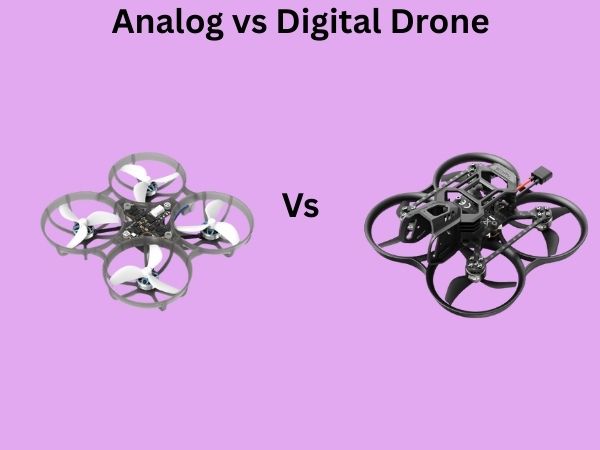
If you’re diving into the world of FPV (First Person View) drone racing or aerial exploration, you’ve probably stumbled upon this burning question: should you go with an analog or digital FPV system? It’s like choosing between a classic film camera and a modern digital one—both have their charm, but they work in fundamentally different ways. In this comprehensive guide, I’m going to walk you through everything you need to know about these two competing technologies, so you can make an informed decision that matches your flying style and budget.
Understanding the Basics: What Are Analog and Digital FPV Systems?
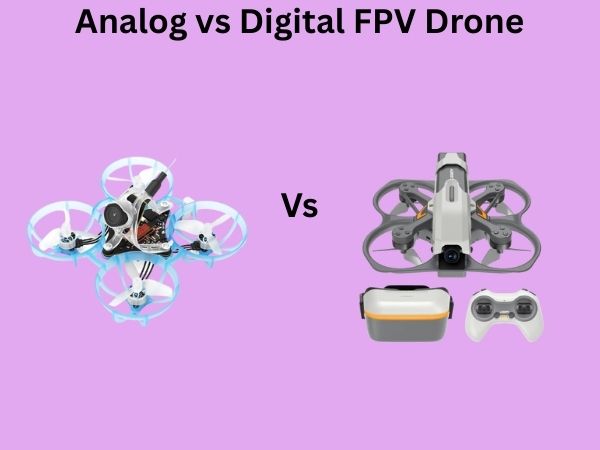
Before we jump into the nitty-gritty comparisons, let me clarify what we’re actually talking about here. An analog FPV system transmits video signals using traditional radio frequency methods that have been around since the early days of drone racing. Think of it as sending a continuous stream of information through the airwaves, similar to how old television broadcasts worked. On the flip side, digital FPV systems compress and digitize the video feed, breaking it down into data packets that travel wirelessly to your goggles or monitor. It’s kind of like the difference between an old radio station and a modern streaming service—one’s been proven for decades, while the other brings cutting-edge efficiency to the table.
The Evolution of FPV Technology
The FPV drone scene started almost exclusively with analog systems because that’s what was available and affordable. Pilots would strap tiny analog cameras to their quadcopters and use 5.8 GHz transmitters to beam the signal to their video goggles. It worked surprisingly well for racing and freestyle flying. However, as technology advanced and digital systems became more accessible, pilots started noticing the advantages these newer systems offered. Today, both technologies coexist, each serving different purposes and pilot preferences.
Latency: The Critical Factor for FPV Pilots
When you’re flying an FPV drone at high speeds through obstacle courses or competing in races, latency is absolutely crucial. This is the delay between what your camera captures and what you see in your goggles. Even a difference of 20 milliseconds can mean the difference between a clean gate pass and a spectacular crash.
Analog Latency Performance
Analog systems typically deliver latency in the range of 2 to 4 milliseconds, which is remarkably low. This happens because analog video streams continuously without the need for compression or packet processing. Your signal travels directly from the transmitter to the receiver with minimal processing overhead. For racing pilots, this ultra-low latency is a game-changer—it feels like you’re literally sitting in the drone’s seat.
Why Analog Achieves Such Low Latency
The reason analog systems achieve this impressive latency figure comes down to their straightforward transmission method. There’s no encoding, no packet assembly, no buffering. The signal is essentially raw video flowing through the air, hitting your goggles, and rendering on your display almost instantaneously. It’s direct, it’s simple, and it works beautifully for the purpose it was designed for.
Digital Latency Performance
Digital FPV systems have made tremendous strides in recent years. Modern digital systems like DJI O3 Air Unit and Caddx Vista boast latency figures between 40 to 150 milliseconds, depending on the specific system and conditions. While this might sound like a disadvantage compared to analog’s 2-4ms, it’s actually quite competitive for non-racing applications and has improved dramatically from earlier digital solutions.
The Processing Trade-off
Digital systems need to compress video, package it into data streams, transmit it, receive it, decompress it, and then render it. Each step adds a tiny amount of delay. However, manufacturers have optimized this process so well that many casual pilots barely notice the difference. In fact, some might argue that the additional image quality compensates for the slightly higher latency in non-competitive flying scenarios.
Image Quality: Seeing What You’re Flying
This is where digital systems really start to shine. If you value crisp, clear footage and the ability to see fine details while flying, digital has a significant advantage over analog.
Analog Image Quality Characteristics
Analog video tends to have a softer, grainier appearance with more visible noise, especially in low-light conditions. You might notice color bleeding, reduced sharpness at edges, and a general “fuzzy” quality to the image. The resolution is typically lower, and the picture can become increasingly degraded if you’re flying at extreme distances from your transmitter. It’s like watching an old VHS tape compared to a Blu-ray—it still works and tells you what you need to see, but it’s not pristine.
- Typical resolution: 480p or lower
- Color accuracy: Moderate, with potential color shift
- Low-light performance: Significant noise and grain
- Video artifacts: Ghosting and flutter possible
Digital Image Quality Characteristics
Digital systems deliver noticeably sharper, cleaner video with better color reproduction and superior low-light performance. The image remains consistent even as you increase your flying distance, up to the system’s range limit. You’ll see fine details like trees, buildings, and obstacles with remarkable clarity. Many digital systems record in 1080p or higher, giving you stunning footage even after the flight is over.
- Typical resolution: 1080p to 4K
- Color accuracy: Excellent color fidelity
- Low-light performance: Minimal noise, clean image
- Video artifacts: Clean transmission with no ghosting
Practical Implications of Image Quality
When you’re racing through a course at 100 mph, slightly softer image quality from analog systems is manageable—you’re just looking for general landmarks and gates. However, if you’re flying FPV for cinematic freestyle, photography, or exploration, the crisp digital image quality makes a world of difference. You can spot hazards more easily, frame shots more precisely, and produce footage that’s actually worth sharing.
Range Comparison: How Far Can You Really Fly?
The operational range of your FPV system determines how adventurous you can be with your flying.
Analog System Range
Analog systems typically offer a range of 1 to 3 kilometers in open environments with good conditions, though some experienced pilots report extending this to 5 kilometers or more. The problem is that as you push the range limits, video degradation becomes increasingly noticeable. The signal weakens, noise increases, and the image can become unwatchable. Many pilots find the practical usable range is closer to 1 to 2 kilometers before the image quality suffers too much.
Digital System Range
Modern digital FPV systems are genuinely impressive in this regard. Systems like DJI’s O3 Air Unit can maintain clean video signals at ranges of 5 to 15 kilometers depending on conditions and antenna setup. The beautiful thing about digital range is that it doesn’t degrade gradually like analog—you either have a solid connection or you don’t. This means you can fly at maximum range and still get crystal-clear video right up until the connection drops.
Environmental Factors Affecting Range
Both systems are affected by terrain, interference, and weather conditions. Flying in an urban environment with lots of metal structures or near a busy airport will reduce your effective range significantly compared to flying in open countryside. Trees and hills create dead zones where signal gets blocked. Digital systems handle interference better thanks to their error-correction capabilities, making them more reliable in challenging environments.
Cost Analysis: Your Budget Matters
Money talks, and when you’re building your FPV setup, the cost difference between analog and digital is substantial.
Analog System Costs
An entry-level analog FPV setup is remarkably affordable. You’re looking at spending $150 to $300 for a decent analog camera, VTx (video transmitter), and basic video receiver. Analog goggles can be found for $100 to $200, making the total initial investment quite accessible for beginners. This affordability is a huge reason why analog systems remain popular, especially among casual flyers and those just getting started in the hobby.
Digital System Costs
Digital systems command a premium. A quality digital camera and transmitter unit can run $400 to $800, and digital video goggles typically cost $500 to $1500 depending on features and brand. A complete digital setup can easily exceed $1500 to $2500. However, if you amortize this cost over years of flying, consider that you’re also getting superior range and image quality that might make the investment worthwhile.
Long-term Value Consideration
Here’s something worth thinking about: analog systems have been around longer and parts are abundant, making repairs and upgrades relatively inexpensive. Digital systems are newer and their ecosystem is still evolving, which means parts might be pricier but compatibility options are improving rapidly. Both represent solid long-term investments depending on your flying goals.

Reliability and Signal Stability
You want a system that won’t betray you mid-flight by losing signal or dropping frames.
Analog Reliability
Analog systems are proven and robust. They’ve been used in FPV racing for years with tremendous success. However, they can be susceptible to interference from other analog systems on nearby frequencies and from WiFi signals. If you’re flying in an area with lots of other FPV pilots, frequency coordination becomes important. Signal dropout tends to happen gradually—the image gets noisier rather than disappearing entirely, giving you warning that you’re losing range.
Digital Reliability
Digital systems use sophisticated error correction and frequency-hopping technology that makes them remarkably resistant to interference. Multiple pilots can fly simultaneously on digital systems without needing to carefully coordinate frequencies. The downside is that digital signal loss can be more abrupt—you might have a perfect connection right up until you lose it. Modern digital systems include redundancy and failsafe mechanisms that help prevent unexpected disconnects.
Use Cases: Matching Technology to Purpose
The right choice depends on what you want to do with your drone.
When Analog Makes Sense
Choose analog if you’re interested in competitive FPV racing. The ultra-low latency is unmatched for high-speed racing applications. Analog is also your best bet if you’re just getting started on a tight budget, want to experiment without major financial commitment, or fly primarily in line-of-sight scenarios where range isn’t critical. If you enjoy tinkering and want maximum flexibility to customize components, analog’s modular nature is perfect.
When Digital Makes Sense
Digital systems are ideal if you value video quality and want footage worth sharing. Choose digital if long-range exploration flying appeals to you, you want to fly in crowded areas with other pilots, or you prioritize image clarity for cinematic freestyle flying. Digital is also better if you want an all-in-one integrated solution that “just works” without needing to understand RF theory and frequency coordination.
Interference and Frequency Management
The electromagnetic spectrum is getting crowded, and how your FPV system handles this matters.
Analog Frequency Challenges
Analog systems operate on specific frequency bands, traditionally around 5.8 GHz in most countries. Multiple analog transmitters on the same frequency will interfere with each other, creating unwatchable video. You need a frequency management system where multiple pilots coordinate which frequencies they’re using. This works fine at organized races but gets complicated at casual flying spots with unpredictable pilot traffic.
Digital Frequency Advantages
Digital systems use frequency-hopping and spread spectrum technology that allows multiple transmitters to coexist on the same frequency band without interfering with each other. It’s revolutionary compared to analog—imagine being able to have five FPV pilots flying simultaneously without worrying about frequency coordination. This is a genuine quality-of-life improvement for digital system users.
Power Consumption and Battery Life
Your power budget affects flight duration and equipment weight.
Analog Power Requirements
Analog transmitters typically consume 200 to 400 milliwatts of power. This is quite efficient, meaning your drone’s flight time is barely impacted by the FPV system. The video receiver is similarly frugal with power. Overall, analog systems add minimal power draw to your system.
Digital Power Requirements
Digital systems consume more power—typically 500 to 1000 milliwatts or more depending on transmission power and video quality settings. This can reduce your flight time by 5 to 10 minutes on a typical racing quad. It’s not dramatic, but it’s worth considering if maximum flight duration is important to you.
Growing Trends and Future Outlook
The FPV landscape is shifting, and understanding the trajectory helps you make a future-proof investment.
The Digital Revolution is Real
More manufacturers are jumping into the digital FPV market. DJI, Caddx, and others are pushing the boundaries of what’s possible with digital transmission. Prices are gradually decreasing as competition intensifies and production scales up. If you’re not buying today, digital becomes increasingly attractive for future purchases.
Analog Isn’t Going Anywhere
Despite digital’s advances, analog remains relevant. The racing community has deep roots in analog technology, and many competitive pilots aren’t switching anytime soon. The abundance of cheap used analog equipment means it will remain accessible for budget-conscious pilots and beginners for years to come.
Practical Tips for Choosing Your System
Let me give you some actionable guidance based on common scenarios.
For Complete Beginners
Start with analog. It’s affordable, forgiving if you crash and break things, and you’ll learn the fundamentals without investing a fortune. Once you’ve developed your skills and know whether FPV is truly for you, you can upgrade to digital if desired.
For Racing Enthusiasts
Analog is still the standard for competitive racing. Check your local racing league’s requirements—they’ll likely specify analog for now. The ultra-low latency gives you the responsiveness you need to shave milliseconds off your lap times.
For Content Creators
Digital is your best friend. The video quality is incomparably better, and the range gives you options for creative shots that analog simply can’t deliver. The investment in digital pays dividends in the quality of footage you can produce.
For Casual Explorers
Digital wins here too. The range and image quality let you venture further and see what you’re capturing in real time with stunning clarity. The higher cost is offset by the superior experience.
Troubleshooting Common Issues
Analog System Troubleshooting
If you’re experiencing signal breakup or noise with an analog system, try changing your frequency—you might have interference from another pilot. Check that your antennas are properly oriented (typically perpendicular to each other) and haven’t sustained damage. Ensure your transmitter and receiver are operating on the same frequency and band. Consider upgrading your antenna quality if you’re consistently losing signal at moderate ranges.