Analog vs Digital Drone: Which Is Better for Beginners?
So you’re thinking about getting into drone flying, and you’ve stumbled upon this confusing world of analog and digital systems. Trust me, you’re not alone in feeling overwhelmed. The drone industry has exploded over the past decade, and with it comes a whole new vocabulary that can make your head spin faster than a drone’s propeller.
Let me break this down for you in a way that actually makes sense. Whether you’re a curious hobbyist or someone considering drones for the first time, understanding the differences between analog and digital drones is crucial to making the right choice. This decision will impact your flying experience, your wallet, and ultimately, how much fun you’ll have with your new gadget
Understanding the Basics: What Are Analog and Digital Drones?
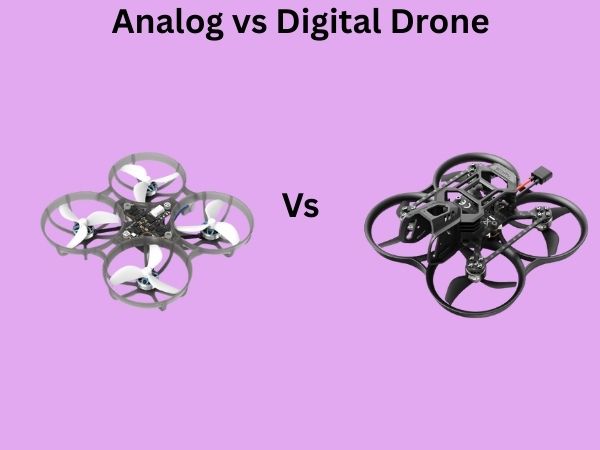
Let’s start with the fundamentals. An analog drone uses analog video transmission to send the feed from the camera directly to your goggles or monitor. Think of it like an old-school television broadcast—the signal continuously flows from point A to point B without any compression or processing in between.
A digital drone, on the other hand, converts the video feed into digital data before transmission. This is more like modern streaming services where the data gets compressed, processed, and then transmitted to your device. It’s a more sophisticated approach that involves multiple layers of technology working together.
The Technology Behind Each System
Analog systems have been around for decades. They’re relatively simple compared to their digital counterparts. The camera sends a raw video signal through radio frequency (RF) waves directly to the receiver. It’s straightforward, which is part of their charm.
Digital systems are newer and more complex. They use advanced encoding, decoding, and error correction protocols. The video signal gets broken down into digital packets, transmitted, and then reassembled on the receiving end. This sophistication comes with both advantages and disadvantages.
How Analog Drones Work
Understanding how analog drones function is helpful if you want to grasp why they’re still popular among certain segments of the drone community. These systems have been tried and tested for years, and there’s something satisfying about their simplicity.
The Transmission Process
When you’re flying an analog drone, the camera mounted on the device continuously captures video and transmits it directly to your receiver. There’s no middle-man processing happening. The signal travels through the air as analog waves, much like how your grandmother’s old radio worked.
This direct transmission means what you see is what you get. If there’s interference or signal degradation, you’ll notice it immediately. There’s no buffering, no compression artifacts, and no lag in the traditional sense. It’s raw, unfiltered video streaming from your drone to your eyes.
Common Analog Drone Frequency Bands
- 5.8 GHz frequency band (most common)
- 1.2 GHz frequency band
- 2.4 GHz frequency band
The 5.8 GHz band is the sweet spot for analog drones because it offers a good balance between range and video quality. Lower frequencies like 1.2 GHz provide longer range but reduced image clarity, while 2.4 GHz is often used for control signals rather than video transmission.
How Digital Drones Work
Digital drones represent the evolution of FPV (First Person View) flying. They take the fundamental concept of pilot-to-drone communication and wrap it in modern technology. It’s like comparing a flip phone to a smartphone—both make calls, but the capabilities differ dramatically.
The Digital Encoding System
When you fly a digital drone, several things happen simultaneously. The camera captures video, and a processor converts this into digital data. The system then applies compression to reduce file size, adds error correction codes, and packages everything into transmittable packets. This entire process happens in milliseconds.
These digital packets travel through the air much more efficiently than analog signals. Because they’re structured and contain error-correction information, the receiver can identify and fix corrupted data automatically. This is why digital drones often provide cleaner video feeds with fewer distortions.
The Advantage of Error Correction
One of the standout features of digital transmission is its built-in redundancy. If a bit of data gets scrambled during transmission, the system can often figure out what it should be and correct it on the fly. This is like having a spell-checker for your video feed.
Analog systems lack this safety net. Corrupted analog signals appear as visible noise or glitches in your video feed. With digital, the system either displays perfect video or nothing at all. There’s less of that grainy, fuzzy middle ground.
Video Quality and Transmission Differences
This is where the differences really become apparent, and it’s probably one of the biggest factors influencing your decision as a beginner.
Analog Video Clarity
Analog drones provide continuous video without compression. If you’re in a clean RF environment with minimal interference, the video quality can be surprisingly sharp. Many experienced pilots actually prefer the feel of analog video—there’s a directness to it.
However, when interference occurs, analog signals degrade gracefully but visibly. You’ll see pixelation, scan lines, and snow-like artifacts creeping into your feed. The image might become less crisp, but you can usually still see what you’re doing.
Digital Video Quality
Modern digital systems offer superior video quality in most conditions. The compression algorithms are intelligent enough to preserve important details while reducing file size. You get sharp, clear video that looks almost like watching HD footage.
The trade-off is that digital systems sometimes exhibit what’s called “digital cliff.” When signal strength drops below a certain threshold, the video doesn’t gradually degrade—it may freeze or cut out abruptly. Some newer systems have improved this significantly, but it remains a consideration.
Resolution and Frame Rate Comparisons
- Analog drones typically transmit 720p or 1080p equivalent, but not true digital resolution
- Digital drones can transmit 1080p and even 4K video depending on the system
- Analog systems usually run at 25 or 30 fps
- Digital systems commonly support 30, 60, or even higher frame rates
Latency and Response Time Comparison
When you’re flying a drone, especially if you’re doing FPV flying, latency is absolutely critical. Latency is the delay between when you move your controller and when that movement appears on your screen. It sounds like it shouldn’t matter much, but trust me, it does.
Analog Latency
Analog drones boast incredibly low latency—we’re talking about 10 to 50 milliseconds in optimal conditions. This is one of their greatest strengths. The signal travels directly from drone to receiver, and what you see is nearly instantaneous with what’s actually happening in the air.
For beginners, this low latency makes analog drones feel more responsive and intuitive. You don’t have to account for delay in your muscle memory, which makes learning easier and flying more enjoyable.
Digital Latency
Digital systems introduce additional processing steps, which can increase latency. However, modern digital systems have made tremendous strides. You can now find digital drones with latency in the 50 to 100 millisecond range, which is acceptable for most pilots, though noticeably higher than analog.
The trade-off is that digital systems offer more stable video quality and better interference resistance, even if the latency is slightly higher. For beginners, this additional delay is rarely perceptible during casual flying.

Cost Considerations for Beginners
Let’s be honest—budget matters, especially when you’re just starting out. You don’t want to spend a fortune on a hobby you might discover isn’t for you.
Initial Investment Comparison
Analog drones are generally more affordable to get into. A basic analog FPV setup can cost anywhere from $150 to $400. You’re getting a drone, receiver, goggles, and a controller for relatively reasonable money.
Digital drones tend to cost more upfront. A decent digital FPV system typically ranges from $400 to $1500, depending on the brand and features. The technology is newer, more refined, and manufacturers command premium prices for it.
Hidden Costs to Consider
- Replacement batteries and chargers
- Spare propellers and repair parts
- Firmware updates and software licenses (some digital systems)
- Protective cases and carrying equipment
- Antenna upgrades for better range
- Video recording modules or external cameras
The true cost of drone ownership extends beyond the initial purchase. Both analog and digital drones require ongoing investment in maintenance and upgrades. However, analog systems are typically cheaper to repair and modify.
Range and Connectivity Performance
How far can you fly your drone before losing signal? This is a practical question that affects where you can fly and how much fun you can have.
Analog Range Capabilities
Analog drones can achieve impressive range—often 5 to 10 kilometers or more in open areas with line of sight. The signal propagates well and can travel substantial distances, especially on lower frequency bands.
The drawback is that range degrades with interference. Walls, buildings, and other RF interference can reduce your effective range significantly. It’s also why you need clear line of sight for best results.
Digital Range Performance
Digital drones typically have shorter theoretical range than analog—often 3 to 5 kilometers in optimal conditions. However, what they lose in raw distance, they gain in reliability. The signal is more robust and handles obstacles better.
Digital systems are smarter about signal management. They use techniques like automatic frequency hopping to avoid interference and maintain connection in challenging environments. You might not go as far, but you’ll have more stable flying in real-world conditions.
Durability and Build Quality
Drones are prone to crashes, especially when you’re learning. How well does your equipment handle the inevitable bumps and falls?
Analog System Durability
Analog systems are mechanically simpler, which often translates to greater durability. There are fewer components that can fail, and the simpler electronics are generally more robust. If you drop your analog goggles or crash your drone, the odds of them surviving are often pretty good.
The analog equipment has also been around for years, so manufacturers have perfected the design. Spare parts are readily available and usually inexpensive.
Digital System Durability
Digital systems contain more sophisticated electronics, which can be both a blessing and a curse. Modern digital equipment is typically well-built, but when something breaks, it’s often more complicated to repair.
However, many manufacturers now offer excellent warranties and support for their digital products, which helps offset this concern. The trade-off is worth it if you value the superior features.
Learning Curve and Ease of Use
As a beginner, you want something that doesn’t require a PhD to operate. How easy is each system to set up and use?
Analog Drones for Beginners
Analog drones are straightforward to set up. Pair your goggles with your receiver, calibrate your controller, and you’re flying. The interface is usually intuitive, and there’s minimal software involved.
The flying experience is also more intuitive because the low latency makes the drone feel responsive. You’re essentially controlling it in real-time, which makes learning smoother.
Digital Drones for Beginners
Digital systems require more initial setup. You might need to update firmware, configure settings, and establish Bluetooth connections. It’s not overly complicated, but it’s definitely more involved than analog.
However, once everything is set up, many pilots find digital systems easier to use during actual flying. Better video quality and more stable signal mean fewer distractions while you’re learning.
Popular Analog and Digital Drone Models
Let me introduce you to some drones that represent each category. These are options you might consider as a beginner.
Well-Regarded Analog Drones
- Fat Shark drones and systems—industry veterans with loyal followings
- ImmersionRC—known for excellent build quality and reliability
- Eachine budget models—great for beginners on a tight budget
- Skyzone analog goggles paired with racing drones
Popular Digital Drone Systems
- DJI digital FPV systems—cutting-edge technology with excellent support
- HDZero systems—newer technology offering excellent digital video quality
- Avatar HD systems—compact and reliable
- Caddx Vista—a solid mid-range digital option
Environmental Factors and Interference
The real world isn’t always a perfect flying environment. How do these systems handle challenges?
Urban Flying Considerations
Cities are filled with Wi-Fi signals, cellular networks, and all sorts of RF interference. Analog systems struggle in this environment because they have no intelligent interference avoidance. You might get constant glitching and signal breakup.
Digital systems handle urban environments much better. Their error correction and frequency-hopping capabilities make them more resilient to the electromagnetic chaos of city living.
Open Field Flying
In open spaces like parks or fields, both systems shine. Analog drones particularly excel here, where there’s minimal interference and long lines of sight. You’ll get clean video and maximum range.
Digital drones also perform wonderfully in open spaces, offering superior video quality and reliable connections throughout.
Weather and Environmental Impact
Rain, fog, and extreme temperatures affect both systems. Analog drones are generally more tolerant of moisture exposure due to simpler electronics. Digital systems require more careful protection from the elements.
Wind presents challenges for both, though this is more about the drone’s flight characteristics than the transmission system. Heavier digital systems might struggle more in strong winds than lighter analog setups.
Future-Proofing Your Investment
You want your investment to remain relevant and useful. Which system is more likely to be around and evolving in five