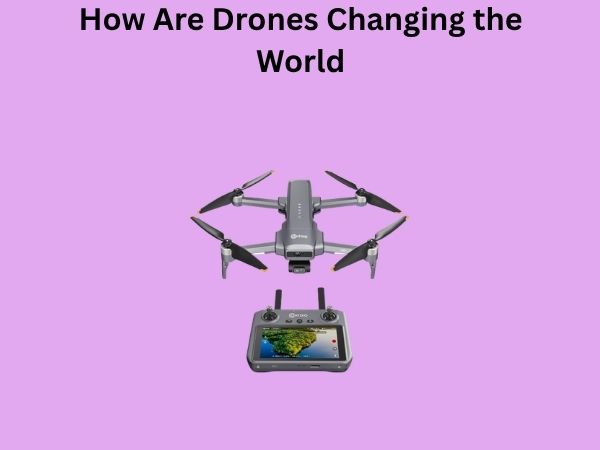
How Are Drones Changing the World? The Global Impact of Aerial Technology
When you look up at the sky these days, you might spot something that would have seemed like pure science fiction just a decade ago. Drones—those unmanned aerial vehicles buzzing overhead—are no longer confined to military operations or Hollywood blockbusters. They’re becoming as common as delivery trucks, and honestly, they’re reshaping how we live, work, and solve problems in ways we never imagined.
But here’s the thing: most people only scratch the surface when it comes to understanding drone technology. They see a package being delivered by air and think that’s the extent of it. The reality is far more expansive and genuinely transformative. From agriculture to emergency response, from urban planning to environmental conservation, drones are quietly revolutionizing entire industries. So let’s dive deep into this aerial revolution and explore exactly how these remarkable machines are changing our world.
The Unexpected Rise of Drone Technology
Think about how dramatically technology adoption has accelerated over the past two decades. We went from bulky cell phones to smartphones in our pockets, and now we’re experiencing a similar explosion with drones. What started as expensive military equipment has become accessible to businesses and hobbyists alike. This democratization of drone technology is the first domino that’s created a cascade of innovations.
The drone market has experienced explosive growth, with projections suggesting it’ll reach unprecedented valuations in the coming years. But it’s not just about the numbers—it’s about what these devices represent. They represent our ability to see the world from a new perspective, literally and figuratively. They give us eyes where we previously couldn’t look, and hands where we couldn’t reach.
Why Drones Matter More Than You Think
I want you to imagine trying to inspect a bridge without closing traffic for hours, or surveying a massive farm without walking every single acre. Now imagine doing both in minutes with incredible accuracy. That’s the power of drones. They’re not just adding convenience—they’re fundamentally changing what’s possible in numerous fields.
Drones Revolutionizing Agriculture and Farming
Agriculture is perhaps the most visible example of drone transformation, and for good reason. Farmers are people who’ve been working the land for generations using relatively unchanged methods. Now they’re embracing aerial technology enthusiastically, and the results are remarkable.
Precision Farming and Crop Monitoring
Modern farmers are becoming data scientists, and drones are their most powerful tools. Instead of walking fields to spot problems, drones equipped with multispectral cameras can identify stressed crops before the human eye notices anything amiss. They can detect variations in soil moisture, nutrient levels, and plant health across hundreds of acres in a single flight.
This isn’t theoretical—it’s happening right now. A farmer can use drone imagery to create detailed maps showing exactly which areas need more water, fertilizer, or pest treatment. This precision approach reduces waste, increases yields, and is better for the environment. It’s a win-win-win situation that wouldn’t be possible without aerial perspective.
Crop Spraying and Pesticide Application
Agricultural drones are also taking over the dangerous and laborious task of applying pesticides and fertilizers. Rather than using ground-based methods or hired aircraft that are expensive and hard to control precisely, farmers now use specialized drones that can spray exact amounts to exact locations. These drones:
- Reduce chemical usage by up to 30 percent through targeted application
- Minimize human exposure to harmful pesticides
- Cover large areas in a fraction of the time traditional methods require
- Provide repeatable, consistent results across seasons
The implications are substantial. Reduced chemical use means less environmental impact, lower costs for farmers, and potentially safer food products. It’s a perfect example of how drone technology creates benefits that ripple outward through society.
Emergency Response and Disaster Management
When disaster strikes, every second counts. Hurricanes, floods, earthquakes, and other emergencies create situations where human responders need information quickly. Drones have become invaluable in these critical moments.
Search and Rescue Operations
Imagine a person lost in rugged terrain or a missing hiker in dense forest. Traditional search methods might take days and put rescue teams in danger as they traverse dangerous landscapes. Drones equipped with thermal cameras can cover vast areas in hours, spotting heat signatures that humans would never find. They’ve already saved countless lives by locating missing persons quickly.
What makes this even more powerful is that drones can operate in conditions where human teams struggle. Heavy rain, thick fog, or unstable ground that would slow or stop human searchers barely affects drone operations. They’re tireless, objective, and increasingly sophisticated in their search capabilities.
Damage Assessment and Infrastructure Inspection
After a disaster, authorities need to understand what happened and where help is needed most. Drones provide aerial views that are impossible to get quickly through ground-based methods. They can assess flooding extent, building damage, and infrastructure integrity without putting inspectors in dangerous situations.
For critical infrastructure like bridges, power lines, and communication towers, drones have become standard inspection tools. Instead of scaffolding and rope access teams putting themselves at risk, drones get high-resolution imagery of every inch of structure. This changes the economics of maintenance and makes regular inspections more feasible.
Package Delivery and Last-Mile Logistics
This is probably the most visible way drones are changing the world for everyday people. Major companies are testing and implementing drone delivery services, and it’s not just a gimmick—it’s a practical solution to a real problem.
Speed and Efficiency Improvements
The last mile of delivery—getting packages from a distribution center to your doorstep—accounts for a huge portion of logistics costs. Traffic congestion, traffic lights, and winding roads slow traditional delivery vehicles considerably. A drone, meanwhile, flies in a straight line and doesn’t get stuck in traffic. What might take a delivery truck an hour can take a drone fifteen minutes.
For time-sensitive deliveries—medical supplies, emergency equipment, or other critical items—this speed difference can be genuinely life-saving. Imagine a drone delivering medication to a remote area or bringing urgent supplies to disaster zones. The possibilities expand when you stop thinking about convenience and start thinking about necessity.
Reaching Remote and Underserved Areas
Here’s something that doesn’t get enough attention: drones are providing services to people who’ve never had reliable access to them. In rural areas and developing nations where road infrastructure is poor or nonexistent, drones are bringing goods that would otherwise be inaccessible. A small rural clinic might receive blood samples and medical supplies via drone, dramatically improving healthcare access.
Environmental Monitoring and Conservation
Our planet faces unprecedented environmental challenges, and drones are becoming essential tools for understanding and addressing them. They’re changing how we monitor forests, oceans, and wildlife.
Reforestation and Forest Management
Planting trees is essential for combating climate change, but it’s traditionally labor-intensive. Drones equipped with seed pods are now being used to reforest areas at scale. In some pilot projects, drones can plant thousands of seeds daily—far more than human planters could manage. Combined with AI and ground sensors, drones can even identify optimal planting locations.
Beyond planting, drones monitor forest health, detect illegal logging, and track reforestation progress. Conservation organizations that previously sent people into dangerous terrain can now gather critical data from the air, protecting both workers and forests.
Ocean and Marine Monitoring
Oceans cover most of our planet, yet we understand them poorly. Drones are changing this by collecting data on ocean temperature, pollution, coral bleaching, and marine life. They can track oil spills in real-time and monitor illegal fishing activities across vast oceanic expanses. This environmental intelligence is crucial for policy makers and conservation efforts.
Wildlife Tracking and Anti-Poaching Efforts
Poaching remains a critical threat to endangered species worldwide. Drones equipped with thermal cameras now patrol protected reserves at night, detecting poachers before they can harm animals. The combination of aerial surveillance and rapid response teams has already reduced poaching in several African reserves significantly. It’s conservation technology that actually works in the real world.
Urban Planning and Smart City Development
Cities are complex ecosystems, and understanding them requires data. Drones are providing urban planners and developers with unprecedented insight into how cities function.
Infrastructure Mapping and 3D City Models
Drones equipped with LiDAR sensors create incredibly detailed 3D maps of urban environments. These maps help planners understand traffic flow, identify infrastructure bottlenecks, and design improvements. They’re also valuable for disaster preparedness—having detailed 3D models means emergency responders can plan responses more effectively.
Construction Site Management
Large construction projects involve coordinating hundreds of workers and massive machinery. Drones provide real-time oversight, tracking progress and identifying safety issues. They document construction at each phase, creating records that are valuable for quality control and dispute resolution. This aerial perspective has actually reduced construction accidents and improved project timelines.
Healthcare and Medical Applications
It might surprise you, but drones are becoming medical professionals of sorts. They’re delivering supplies that save lives and reaching patients in ways that weren’t previously possible.
Medical Supply Delivery
During the COVID-19 pandemic, drones delivered test kits and medical supplies to isolated communities and to patients in quarantine. They’ve transported blood samples for testing, medication for chronic conditions, and emergency supplies to areas where traditional delivery was too risky or slow. This capability has proven so valuable that many healthcare systems are now integrating drone delivery into their standard operations.
Defibrillator and Emergency Equipment Distribution
Some European cities are deploying drones that can deliver automated external defibrillators (AEDs) to cardiac emergency sites faster than traditional ambulances. In cardiac arrest situations, every second determines survival. Drones reaching a patient in two minutes instead of ten can be the difference between life and death.
Challenges and Concerns We Can’t Ignore
All this innovation comes with legitimate concerns that we need to address seriously. Drones aren’t a perfect solution to everything, and we should be thoughtful about their deployment.
Privacy and Surveillance Issues
Drones equipped with cameras can see into private spaces, and this raises genuine privacy concerns. Who’s flying these drones? What are they recording? How is that data protected? These aren’t academic questions—they’re issues that affect real people’s rights and safety. Regulatory frameworks are developing, but they’re struggling to keep pace with the technology.
Safety and Airspace Management
As drone traffic increases, managing our airspace becomes more complicated. Collisions between drones, or between drones and aircraft, are real risks. There’s also the challenge of unauthorized drones being used for illegal purposes. The system for managing drone traffic is still developing, and we need robust solutions before the sky becomes too crowded.
Environmental and Noise Concerns
Drones create noise, and widespread drone use could create noise pollution in urban areas. There are also questions about battery disposal and the environmental impact of manufacturing millions of drones. These are solvable problems, but they require attention and intentional solutions.
Future Possibilities: Where Drones Go From Here
If drones are already this transformative, what comes next? The trajectory is genuinely exciting, though it requires responsible development.
Autonomous drone swarms will likely perform complex tasks that individual drones can’t handle. Imagine hundreds of drones working in coordination to map infrastructure, manage disasters, or conduct scientific research. Battery technology improvements will extend flight times dramatically. AI integration will make drones smarter, more adaptive, and more capable.
Urban air mobility—basically flying taxis using drone-like technology—is moving from science fiction to engineering challenge. Several companies are developing passenger-carrying drones that could revolutionize urban transportation.
The Economic Impact of Drone Innovation
Let’s talk about money, because the economic implications are significant. The drone industry is creating jobs, generating revenue, and disrupting traditional business models.
New industries are emerging around drone services. Companies are hiring pilots, engineers, and specialists who work exclusively with drones. Insurance companies are developing drone-specific policies. Software companies are building platforms for drone management. It’s creating economic opportunity across multiple sectors.
Simultaneously, drones are disrupting traditional industries. Some delivery jobs are changing (though not disappearing entirely—someone still needs to coordinate and manage drone operations). Some inspection work is becoming more efficient. This creative destruction is the nature of technological progress.
Regulatory Frameworks and Responsible Innovation
As drones proliferate, governments are developing regulations to manage them. Different countries are taking different approaches, which creates both challenges and opportunities. The goal is finding balance: enabling innovation while protecting safety, privacy, and security.
Licensing requirements, airspace restrictions, and operational guidelines are becoming standard. These regulations aren’t meant to stifle innovation—they’re meant to ensure drones integrate safely into our world. Forward-thinking regulations actually enable more confidence in drone technology.
Conclusion
So, how are drones changing the world? They’re changing it in ways both visible and subtle, dramatic and incremental. They’re making agriculture more efficient and sustainable. They’re enabling emergency responders to save lives faster. They’re providing access to people and places previously difficult to reach. They’re gathering environmental data that helps us understand and protect our planet. They’re reshaping logistics, urban planning, and healthcare.
But perhaps most importantly, drones represent our expanding capability to solve problems creatively. They demonstrate that with the right perspective—literally an aerial perspective—we can see challenges differently and find solutions that weren’t previously possible. They’re not a silver bullet for all our problems, and they come with legitimate concerns that deserve serious attention.
The drone revolution is still in its early stages. We’re learning what’s possible, refining how to do it responsibly, and scaling solutions that actually work. The world of tomorrow will be shaped significantly by how we choose to develop and deploy this technology. It’s an exciting time, and we’re all part of determining what happens next.
Frequently Asked Questions
Are drones safe to use around residential areas?
Drones can operate safely around residential areas when properly regulated and operated by trained pilots. Modern regulations require line-of-sight operation, altitude restrictions, and mandatory licensing. Commercial drones have extensive safety features including obstacle avoidance, automatic return-to-home functions, and redundant systems. As technology and regulations mature, residential drone operations are becoming increasingly safe and routine.
How much do commercial drones typically cost?
Commercial drone prices vary significantly based on capabilities. Consumer-grade drones start around five hundred dollars, while professional agricultural and inspection drones range from five thousand to fifty thousand dollars. Heavy-lift drones and specialized systems can cost six figures. However, the cost is often justified by the efficiency gains and capabilities they provide, making them economical investments for many businesses.
Can drones be used for illegal surveillance?
Yes, unfortunately they can be, which is why privacy laws and regulations are critical. Most jurisdictions have regulations against operating drones over private property without permission or using them to record people without consent. Law enforcement agencies have tools to detect and disable unauthorized drones. As regulations strengthen and technology improves, the systems to prevent illegal surveillance are also improving.
What’s the maximum flight time for commercial drones?
Most modern commercial drones have flight times between twenty and forty-five minutes on a single charge. However, advances in battery technology and lighter materials are extending this. Some specialized drones can stay aloft for several hours, and solar-powered experimental drones have achieved significantly longer flight times. For most commercial applications, current flight times are sufficient when properly planned.