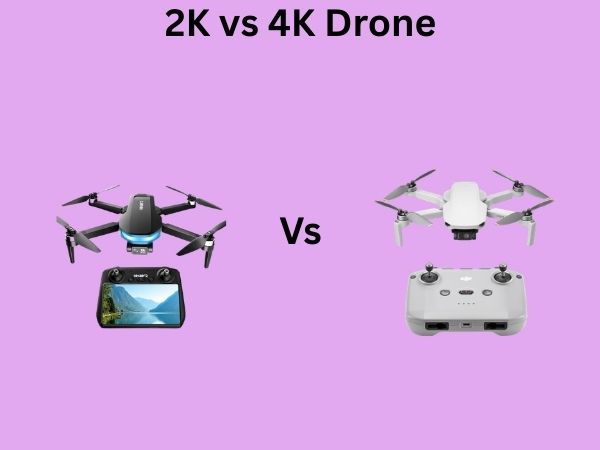
1080p vs 4K Drone: Is 4K Really Worth the Upgrade?
When you’re standing in front of a drone display at your local electronics store, or scrolling through endless options online, you’ve probably asked yourself this question: do I really need 4K? It’s a fair question. After all, a 1080p drone is significantly cheaper, lighter, and often easier to transport. But here’s the thing—the answer isn’t as straightforward as you might think, and it depends entirely on what you’re trying to achieve with your aerial photography.
Let me walk you through what I’ve learned after spending countless hours researching, testing, and analyzing both 1080p and 4K drones. By the end of this article, you’ll have a clear understanding of whether that extra investment in 4K is actually worth your hard-earned money.
Understanding 1080p and 4K: The Basics
Before we dive into the comparison, let’s talk about what these terms actually mean. Think of resolution like the number of pixels your camera captures—more pixels equals more detail. It’s similar to how a photograph becomes clearer when you zoom in on a higher-resolution image.
What Does 1080p Mean?
1080p, also known as Full HD (High Definition), refers to a resolution of 1920 by 1080 pixels. This has been the standard for HD video for years now, and frankly, it’s still incredibly capable. When you watch most content on streaming services or television, you’re likely viewing something in 1080p or lower. The “p” stands for progressive, which is just a technical way of saying the image is displayed line by line rather than interlaced.
What Does 4K Mean?
4K, technically known as Ultra HD, has a resolution of 3840 by 2160 pixels. Notice something? That’s roughly four times the resolution of 1080p. The “4K” name comes from the approximate 4000-pixel width. This means you’re capturing significantly more visual information in every frame.
The Technical Differences: Where Things Get Interesting
Sensor Size and Capability
Here’s where the technical rabbit hole gets deeper. 4K drones typically come equipped with larger sensors than their 1080p counterparts. A larger sensor acts like a bigger window—it lets in more light and captures more detail. This is crucial in challenging lighting conditions like early morning or late evening shots. If you’ve ever tried filming with a budget action camera in low light, you know how important this becomes.
Light Sensitivity and ISO Performance
The sensor’s light sensitivity, measured in ISO, plays a huge role in image quality. 4K drones generally have better ISO performance, meaning they can handle dimly lit environments without producing grainy, noisy footage. A 1080p drone might struggle in these conditions, resulting in footage that looks like it was filmed through a mesh screen.
Bitrate and Data Compression
When a drone records video, it compresses the data so the file doesn’t become impossibly large. Think of this like squeezing a sponge—you’re trying to fit as much information as possible into a smaller space. 4K drones typically use higher bitrates, which means they compress the data less aggressively. This results in better quality because there’s less information loss during recording.
Comparing Video Quality: What You Actually See
Sharpness and Detail
Let’s be honest: when you watch a 4K video on a standard 1080p monitor or television, you won’t see the full benefit. But here’s the kicker—4K footage gives you options. If you’re a content creator, that extra resolution means you can zoom in or crop your footage without losing quality. It’s like having insurance for your creative decisions.
For example, imagine you’re filming a real estate property. With 4K, you can capture the entire scene and then zoom into specific features during editing without the footage looking pixelated. With 1080p, you’re committed to your framing choice when you hit record.
Color Accuracy and Dynamic Range
This is where the conversation becomes nuanced. Many 4K drones support higher color depths (10-bit instead of 8-bit) and better dynamic range, which refers to the spectrum between the brightest and darkest parts of your image. Essentially, 4K cameras can capture more colors and handle challenging lighting situations more gracefully.
Frame Rate Considerations
Here’s something that surprises people: not all 4K drones shoot at the same frame rates, and sometimes 1080p drones have the advantage. Some 4K drones max out at 30 frames per second (fps), while certain 1080p drones can shoot at 60 fps or higher. If you want smooth slow-motion footage, this matters tremendously. A 60fps 1080p video will look smoother than a 30fps 4K video when slowed down.
The Cost Factor: What You’ll Actually Spend
Initial Purchase Price
Let’s address the elephant in the room—4K drones are expensive. Generally speaking, you’re looking at a price difference of several hundred dollars, sometimes more. A decent consumer-grade 1080p drone might cost you $300-$500, while a comparable 4K model could run $800-$1500 or higher.
That’s not just a 50% increase; it’s often double or more. For hobbyists who just want to capture some aerial footage of their neighborhood or family events, this premium might feel unjustified.
Hidden Costs Beyond Purchase Price
But wait—there’s more to consider. 4K drones consume more power, which means you’ll need to invest in additional batteries. You’ll also need faster memory cards with higher write speeds to handle the data flow. Over time, these small expenses add up.
- Extra batteries: $100-$300
- High-speed SD cards: $50-$150
- External hard drives for storage: $100-$300
- Software for editing 4K footage: $200-$2000
Suddenly, that $800 difference in purchase price doesn’t look so small anymore.
Battery Life and Flight Performance
How 4K Impacts Flight Time
Processing 4K video requires more computational power, which drains the battery faster. It’s like the difference between running a sprinter’s pace and a marathon pace—the harder you work, the quicker you run out of energy. Most users report that 4K drones have flight times that are 10-20% shorter than comparable 1080p models.
If a 1080p drone gives you 30 minutes of flight time, you might only get 25 minutes with a 4K model. For casual flying, this isn’t catastrophic, but it does mean shorter sessions and more frequent battery swaps.
Weight and Portability
4K drones tend to be heavier than 1080p alternatives, which affects portability. If you’re someone who travels frequently or likes to carry your drone in a backpack, the extra weight becomes noticeable. Some 4K drones are also bulkier, which can be problematic if you’re hiking or navigating tight spaces.
Storage and File Management: A Growing Concern
File Size Differences
Here’s a practical headache: file sizes. A one-hour video in 1080p might take up 2-3 GB of storage, while the same video in 4K could consume 12-15 GB. If you’re filming regularly, you’ll quickly fill up external drives and find yourself constantly managing files.
Editing Challenges
Editing 4K footage requires a more powerful computer. Your laptop might struggle or freeze when trying to edit 4K clips. You’ll likely need to invest in better hardware, which adds another layer of expense. This is especially important if you’re not editing on a high-end workstation.
Real-World Use Cases: Where Each Format Shines
When 1080p Is Perfectly Sufficient
Honestly, there are plenty of scenarios where 1080p delivers everything you need. Let me break them down:
- Social media content: Instagram, TikTok, and Facebook automatically compress videos anyway
- Personal memories: Family gatherings and local exploration don’t require cinema-quality footage
- Beginners learning to fly: Focus on piloting skills, not resolution
- Budget-conscious filmmaking: Create content without breaking the bank
- Real estate photos: Static shots for property listings look great in 1080p
When 4K Becomes Essential
Now, let’s flip the coin. There are definitely scenarios where 4K justifies the investment:
- Professional content creation: Client expectations often demand 4K quality
- Commercial projects: Advertising and marketing materials benefit from premium quality
- Future-proofing: Streaming platforms are increasingly moving toward 4K standards
- Detailed footage: Architectural photography and landscape cinematography benefit from the extra detail
- Post-production flexibility: More pixels mean more editing options and cropping freedom
- Large screen viewing: If your footage will be displayed on big screens, 4K makes a visible difference
Professional vs. Hobbyist Needs: A Critical Distinction
The Professional Perspective
If you’re charging clients money for your drone footage, 4K isn’t really optional—it’s table stakes. Professionals expect quality, and 4K has become the minimum standard in many industries. Wedding videographers, real estate agents, and marketing companies all rely on 4K footage to meet client expectations and stay competitive.
Think of it this way: if you walked into a hair salon and they used scissors from the 1990s, you’d question their professionalism. Similarly, clients expect cutting-edge quality when they’re paying for professional services.
The Hobbyist Reality
As a hobbyist, you have much more freedom. You’re not trying to impress demanding clients; you’re creating content for enjoyment or personal sharing. In this context, 1080p is genuinely sufficient, and the money you save can go toward other aspects of your drone hobby—like better ND filters, spare propellers, or flight training courses.
Future-Proofing Your Investment
Where Technology Is Heading
Here’s something to consider: technology moves forward relentlessly. Five years ago, 4K was a luxury feature. Today, it’s becoming standard. In another five years, we might be having this conversation about 8K vs. 4K.
If you’re planning to keep your drone for several years, there’s an argument for future-proofing. Content you create today in 4K will age better than 1080p content. Streaming platforms are slowly rolling out 4K support, and that trend will accelerate.
Resale Value Considerations
4K drones tend to hold their value better than 1080p models. When you eventually upgrade, a 4K drone will likely resell for a higher percentage of its original price. This slightly offsets the initial premium you paid.
Making Your Final Decision: The Bottom Line
Ask Yourself These Questions
- Will I be charging clients for my work?
- Do I need to edit and crop footage significantly?
- Will my content be viewed on large screens or 4K displays?
- Am I willing to invest in better editing hardware?
- Is portability and flight time critical for my use case?
- What’s my realistic budget, including hidden costs?
- How seriously am I committing to this hobby?
The Recommendation Matrix
Choose 1080p if you: Are a beginner, have budget constraints, primarily share on social media, value flight time and portability, or want to avoid editing complications.
Choose 4K if you: Do professional work, plan significant post-production editing, will display footage on large screens, want maximum creative flexibility, or are investing long-term in drone content creation.
Conclusion
So, is 4K worth the upgrade? The honest answer is: it depends on you. There’s no universal right answer because different people have different priorities and needs.
For most hobbyists who want to capture beautiful aerial footage without breaking the bank, a 1080p drone remains an excellent choice in 2024. Modern 1080p drones produce stunning video that rivals what we considered professional-quality just a few years ago.
However, if you’re serious about content creation, plan to monetize your work, or want maximum flexibility in post-production, the 4K upgrade genuinely pays dividends. The extra resolution, improved sensor quality, and better low-light performance create a noticeable difference in professional contexts.
My advice? Determine your actual needs rather than chasing specs. Don’t buy 4K just because it sounds impressive—buy it because your specific use case justifies the investment. Start with 1080p if you’re uncertain, learn the fundamentals of drone piloting, and upgrade to 4K once you’ve identified genuine gaps in your current setup.
Remember, the best drone isn’t the one with the highest resolution—it’s the one you’ll actually use and enjoy flying. Sometimes, a simpler, more affordable option that you’ll take on more adventures beats an expensive model that stays in a closet.
Frequently Asked Questions
Can I watch 4K drone footage on my 1080p TV?
Yes, absolutely. Your TV will downscale the 4K content to fit your 1080p display, and it will still look great. The benefit of shooting in 4K comes during editing and when viewing on 4K-compatible devices. You’re not wasting the resolution—you’re creating content that works everywhere and offers editing flexibility.
What’s the best 4K drone for beginners?
The DJI Mini series offers excellent 4K capability at a reasonable price point with beginner-friendly features. However, if you’re truly a beginner, I’d still recommend starting with a 1080p model to master flying basics without the pressure of capturing perfect footage on expensive equipment. As you improve your piloting skills, upgrading to 4K makes more sense.
How much storage do I need for 4K drone footage?
Plan for approximately 1.5-2 GB per minute of 4K footage, depending on your bitrate and codec. For a weekend of casual flying, invest in at least